

Modern industries demand materials that are durable, lightweight, heat resistant, and capable of delivering reliable performance under challenging conditions. As manufacturing technologies evolve, engineering thermoplastics have become essential in industries such as automotive, electronics, textiles, electrical systems, and industrial engineering.
Among these advanced materials, PBT resins — also known as Polybutylene Terephthalate (PBT) — have gained significant importance because of their excellent balance of mechanical strength, thermal stability, chemical resistance, and processing efficiency.
Today, manufacturers across the globe rely on PBT for applications requiring precision, durability, and long-term reliability.
Companies like Meher International help industries source advanced engineering polymers and industrial textile materials that meet modern manufacturing standards and industrial performance expectations.
This comprehensive guide explains PBT resin properties, benefits, applications, and why PBT continues to lead as a high-performance engineering thermoplastic.
What Are PBT Resins?
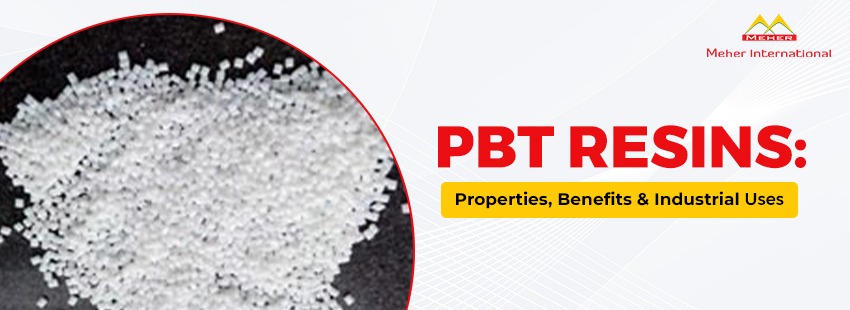
PBT stands for Polybutylene Terephthalate, a semi-crystalline engineering thermoplastic belonging to the polyester family.
It is produced through the polymerization of:
- Terephthalic acid
- Butanediol
The resulting material offers an outstanding combination of:
- Mechanical strength
- Heat resistance
- Electrical insulation
- Dimensional stability
- Chemical resistance
Because of these properties, industrial PBT is widely used in technical and engineering applications.
Why PBT Is Considered a High-Performance Engineering Thermoplastic
PBT has become one of the most trusted engineering plastics because it performs exceptionally well in demanding environments.
Industries prefer PBT because it provides:
- Reliable structural performance
- Lightweight durability
- Excellent processability
- Long-term operational stability
Its versatility allows it to replace heavier materials like metals in many industrial applications.
Key Properties of PBT Resins
The success of Polybutylene Terephthalate comes from its balanced material characteristics.
- High Mechanical Strength
One of the most important PBT properties is its excellent mechanical strength.
PBT components can withstand:
- Heavy loads
- Repeated stress
- Mechanical wear
This makes PBT suitable for industrial and engineering applications requiring durability.
- Excellent Dimensional Stability
PBT maintains its shape and dimensions even under temperature changes and mechanical stress.
This property is critical for:
- Precision engineering parts
- Electrical connectors
- Automotive components
Stable dimensions improve product reliability and operational accuracy.
- Superior Heat Resistance
Industrial PBT performs well under elevated temperatures.
This makes it suitable for applications exposed to heat, including:
- Automotive engine systems
- Electrical equipment
- Industrial machinery
Its thermal stability supports long-term performance in demanding environments.
- Good Chemical Resistance
PBT resins resist exposure to:
- Oils
- Greases
- Fuels
- Industrial chemicals
This property improves durability in harsh industrial conditions.
- Excellent Electrical Insulation
PBT is widely used in electrical and electronic applications because of its insulation properties.
It helps improve:
- Electrical safety
- Component reliability
- System stability
- Low Moisture Absorption
Compared to some engineering polymers, PBT absorbs relatively little moisture.
This helps maintain:
- Dimensional stability
- Mechanical strength
- Electrical performance
even in humid environments.
- Easy Processability
Another major advantage of PBT is its excellent manufacturing flexibility.
It can be processed through:
- Injection molding
- Extrusion
- Blow molding
Its efficient processing characteristics help manufacturers improve productivity.
How PBT Resins Are Manufactured
The manufacturing process for Polybutylene Terephthalate involves controlled chemical polymerization.
Main Manufacturing Steps
Polymerization
Raw chemical compounds react under controlled conditions to form polymer chains.
Cooling and Pellet Formation
The polymer is cooled and converted into pellets or granules for industrial use.
Processing into Final Products
PBT materials are then molded or processed into:
- Engineering parts
- Electrical components
- Industrial materials
- Textile-related products
Strict quality control ensures material consistency and industrial performance.
People you want to know about PBT Resins Manfacturing in Textile information: PBT Resins in Textile Manufacturing Explained
Industrial Applications of PBT Resins
PBT is one of the most versatile engineering thermoplastics available today.
- Automotive Industry
The automotive industry is one of the largest users of PBT materials.
Common Automotive Applications
- Sensor housings
- Electrical connectors
- Headlamp components
- Engine system parts
- Switch assemblies
PBT helps reduce vehicle weight while maintaining durability and heat resistance.
- Electrical and Electronics Industry
PBT is highly valued for electrical insulation and dimensional stability.
Common Applications Include:
- Circuit breakers
- Connectors
- Electrical housings
- Cable insulation systems
Its electrical performance improves safety and reliability.
- Industrial Engineering
Industrial manufacturers use PBT for precision engineering applications.
Examples Include:
- Gears
- Bearings
- Pump components
- Machine housings
The material performs well under mechanical stress and repeated movement.
- Consumer Products
PBT is commonly used in:
- Household appliances
- Power tools
- Electronic accessories
- Durable consumer goods
Its durability improves product lifespan.
- Textile and Technical Applications
PBT is also used in technical textile applications because of its flexibility and resilience.
Applications include:
- Stretch textile materials
- Performance fabrics
- Industrial textile solutions
Benefits of Using High-Quality PBT Resins
Manufacturers prefer high-quality PBT materials because they offer several operational advantages.
Improved Product Durability
Strong mechanical properties increase product lifespan.
Lightweight Performance
PBT helps manufacturers reduce product weight without sacrificing strength.
Better Thermal Stability
Reliable performance under heat improves industrial efficiency.
Reduced Maintenance Costs
Durable materials reduce repair and replacement requirements.
Faster Manufacturing Efficiency
Easy processability supports high-volume production.
PBT vs Other Engineering Thermoplastics
PBT is often compared with other engineering polymers like Nylon and ABS.
Compared to Nylon
PBT generally offers:
- Lower moisture absorption
- Better dimensional stability
- Faster processing
Compared to ABS
PBT typically provides:
- Better heat resistance
- Higher mechanical strength
- Improved chemical resistance
The ideal material depends on the application and performance requirements.
Importance of Quality Control in PBT Manufacturing
Consistent quality is essential for industrial-grade PBT materials.
Manufacturers perform several tests to ensure performance reliability.
Common PBT Testing Methods
Tensile Testing
Measures material strength and elongation.
Thermal Testing
Evaluates heat resistance and melting behavior.
Moisture Testing
Monitors moisture absorption characteristics.
Electrical Insulation Testing
Checks electrical performance and safety standards.
Future Trends in Industrial PBT Applications
The demand for advanced engineering thermoplastics continues to grow globally.
Emerging Trends Include:
- Lightweight automotive solutions
- Sustainable engineering plastics
- Smart electrical systems
- High-performance industrial components
- Advanced technical textile applications
PBT is expected to remain a major material in next-generation industrial manufacturing.
Importance of Reliable Polymer Suppliers
Choosing the right supplier is critical for industrial success.
Reliable suppliers help manufacturers achieve:
- Consistent material quality
- Stable supply chains
- Technical support
- Global delivery reliability
Strong sourcing partnerships reduce operational risks and improve manufacturing performance.
How Meher International Supports Industrial Manufacturers
Meher International supplies advanced engineering polymers and industrial textile materials for global manufacturing industries.
The company helps businesses source reliable PBT materials and technical solutions tailored for industrial applications.
Core Services Offered by Meher International
Engineering Polymer Supply
- PBT resin sourcing
- Technical textile materials
- Industrial polymer solutions
Industrial Yarn and Textile Support
- High-performance yarn sourcing
- Technical textile materials
- Industrial textile solutions
Global Export Services
- International logistics management
- Export documentation support
- Reliable worldwide delivery systems
Benefits of Choosing Meher International
Consistent Product Quality
Reliable sourcing ensures stable manufacturing performance.
Strong International Supply Network
Efficient sourcing and delivery capabilities across global markets.
Technical Expertise
Understanding of engineering thermoplastics and industrial applications.
Competitive Pricing
Cost-effective sourcing solutions for manufacturers worldwide.
Why Meher International Best for Best Yarn?
When businesses need dependable engineering polymers and advanced textile solutions, Meher International provides trusted global sourcing support.
Core Services
- PBT resin sourcing
- Technical textile material supply
- Industrial yarn solutions
- Global export and logistics support
Key Benefits
- Reliable material quality
- Strong global supply network
- Technical sourcing expertise
- Competitive international pricing
Features That Make Meher International Stand Out
- Wide industrial material portfolio
- Export-ready packaging standards
- Responsive customer support
- Long-term business relationships
Meher International helps manufacturers achieve durability, efficiency, and industrial excellence with confidence.
Final Thoughts
PBT resins have become one of the most important engineering thermoplastics in modern manufacturing because of their strength, dimensional stability, heat resistance, and processing efficiency.
From automotive systems and electrical components to industrial engineering and technical textiles, Polybutylene Terephthalate continues to support innovation across industries worldwide.
As industries demand lighter, stronger, and more reliable materials, PBT will continue playing a critical role in future manufacturing technologies.
Choose Meher International for Advanced Polymer Solutions
Partner with Meher International for high-quality PBT resins and advanced industrial textile solutions tailored for modern manufacturing needs.
Improve product performance.
Enhance industrial durability.
Build reliable engineering solutions.
Contact Meher International today to discover premium polymer and yarn solutions for your business.
🌐 Visit: www.meherinternational.com
📧 Email: info@meherinternational.com
📞 Call: +91 261 2328237
📍Address:- 8003 – World Trade Centre, Ring Road, Surat – 395 002, Gujarat, India.
