

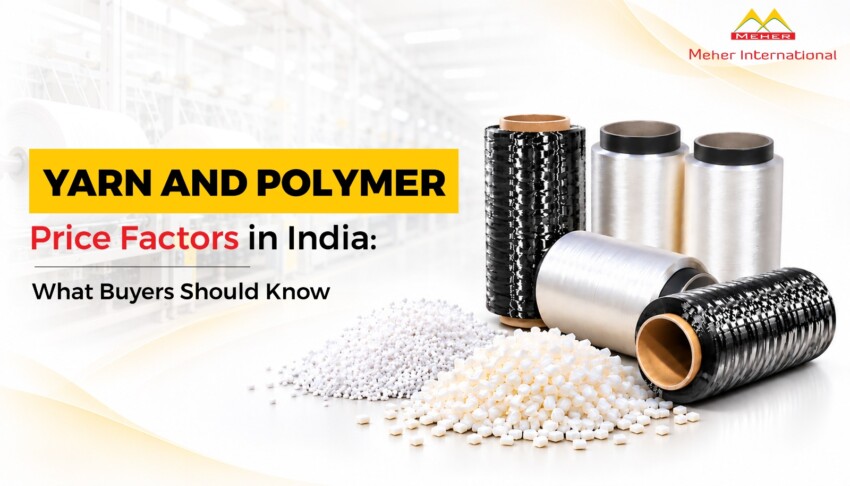
Introduction
India’s textile and manufacturing industries depend on a reliable supply of yarns, fibres, and polymers. From textile mills and fabric manufacturers to plastic processors and industrial businesses, raw material prices directly influence production costs, profit margins, and purchasing decisions.
However, yarn and polymer prices in India are influenced by several factors, including raw material availability, crude oil prices, manufacturing expenses, market demand, import costs, and international trade conditions. Understanding these factors helps buyers plan their purchases, manage budgets, and maintain a consistent supply of materials.
In this guide, we explore the major factors affecting yarn and polymer prices in India and explain how businesses can make more informed sourcing decisions.
1. Raw Material Costs and Availability
Raw material prices are among the most important factors influencing yarn and polymer prices. When the cost of the main ingredients increases, manufacturers often face higher production expenses, which can eventually affect the final selling price.
For yarn, the cost depends on the type of fibre used. Cotton yarn prices are influenced by cotton availability, crop conditions, and quality. Polyester yarn prices depend on the cost of synthetic fibres and petrochemical raw materials. Viscose yarn prices are affected by wood pulp or other cellulose-based feedstocks, processing costs, and supply conditions.
Polymer prices are similarly influenced by the availability and cost of petrochemical feedstocks. Any disruption in the supply chain can affect production and market availability.
What buyers should know: Monitor raw material trends and maintain communication with reliable suppliers. Understanding the material behind the product helps buyers assess price changes more effectively.
2. Crude Oil and Global Market Trends
Crude oil prices play an important role in determining the cost of many synthetic fibres and polymers. Polyester and nylon-related materials depend on petrochemical value chains, while products such as polyethylene and polypropylene are linked to oil and natural gas markets.
When crude oil prices rise, the cost of petrochemical feedstocks and intermediate chemicals may increase. This can put upward pressure on polymer and synthetic yarn prices. However, the impact is not always immediate or proportional because processing margins, inventories, supply-demand conditions, and alternative feedstocks also matter.
Global events, shipping disruptions, and changes in production capacity can further influence international prices.
What buyers should know: Businesses purchasing synthetic yarns or polymers should follow relevant feedstock and market trends instead of relying only on previous purchase prices.
3. Demand and Supply in the Indian Market
The balance between demand and supply is another major factor affecting yarn and polymer prices in India.
When textile manufacturers, garment exporters, packaging companies, or other industrial buyers increase their purchasing activity, demand for raw materials may rise. If suppliers cannot increase production or deliveries quickly enough, prices may move upward.
On the other hand, when demand slows or inventories increase, suppliers may become more competitive, potentially creating better purchasing opportunities.
Seasonal requirements can also influence the market. Textile businesses may increase purchases before busy production periods, while polymer demand can change according to packaging, construction, automotive, and consumer goods activity.
What buyers should know: Plan purchases around actual production requirements and expected demand. Reviewing inventory levels and supplier lead times can help reduce the risk of last-minute buying at unfavourable prices.
4. Manufacturing and Energy Costs
Producing yarns and polymers requires energy, machinery, labour, maintenance, and other operational resources. Changes in electricity tariffs, fuel costs, wages, and factory operating expenses can influence manufacturers’ pricing decisions.
For yarn manufacturers, spinning, texturing, processing, and finishing costs vary according to the product and production method. Different yarn counts, fibre blends, and performance requirements can also affect manufacturing expenses.
Polymer production costs depend on feedstock processing, plant efficiency, technology, and the grade being manufactured.
What buyers should know: Compare products with similar technical specifications rather than choosing a supplier based on price alone. Consistent quality, reduced production waste, and dependable delivery can offer better overall value.
5. Import Costs, Exchange Rates, and Transportation
India’s yarn and polymer supply chains operate within both domestic and international markets. Imported materials may be affected by currency fluctuations, international freight rates, customs duties, insurance, and applicable taxes.
For example, if the Indian rupee weakens against the currency used for an import transaction, the cost of purchasing that material may increase. Higher shipping expenses or longer transport routes can also raise the landed cost.
Domestic products may reduce certain international logistics expenses, but their prices can still be influenced by global raw material trends.
What buyers should know: Evaluate the total landed cost of a product. Include the material price, freight, applicable duties and taxes, handling charges, and delivery timeline before comparing supplier quotations.
6. Product Specifications and Quality Requirements
Not all yarns and polymers are priced equally. Product specifications have a significant impact on the final quotation.
For yarn, important factors include:
- Fibre composition, such as cotton, polyester, viscose, or blended fibres.
- Yarn count, denier, twist, strength, and uniformity.
- Colour, shade consistency, and dyeing performance.
- Special properties, including recycled content or sustainability certifications.
For polymers, buyers may need to consider the polymer type, grade, melt flow properties, mechanical strength, processing suitability, and application-specific requirements.
Specialty products may carry a higher price because of additional processing, tighter quality controls, certification requirements, or limited availability.
What buyers should know: Share accurate specifications with suppliers before requesting a quotation. Clear requirements help avoid unsuitable materials, unexpected costs, and production delays.
7. Government Policies and International Trade Conditions
Government policies can also influence yarn and polymer prices in India. Import duties, export restrictions, quality control requirements, trade agreements, and changes in compliance standards may affect material availability and procurement costs.
International trade conditions can influence the competitiveness of imported products and the export demand for Indian materials. Policy changes may also affect how quickly certain products can enter the market.
The impact varies by product category, origin, applicable regulations, and the timing of implementation.
What buyers should know: Stay informed about relevant trade and regulatory updates. For imported or specialised materials, confirm applicable duties, documentation, quality requirements, and delivery conditions before placing an order.
8. Recycled Materials and Sustainability Requirements
Sustainability is becoming an important consideration for textile and manufacturing businesses. Recycled fibres, regenerated cellulose-based yarns, and materials with recognised sustainability certifications can provide options for companies seeking to improve their material sourcing practices.
However, sustainable products do not always cost less than conventional alternatives. Prices may depend on the availability of suitable feedstock, collection and processing systems, traceability, certification, and quality requirements.
For example, recycled polyester yarn may be affected by the availability and quality of recycled PET feedstock. Regenerated cellulose yarns may depend on pulp sourcing, processing technology, and sustainability standards.
What buyers should know: Compare sustainability claims, product performance, certification, and total costs together. A suitable material should meet both production requirements and the buyer’s sustainability objectives.
9. Practical Tips for Buying Yarn and Polymers in India
Businesses can manage procurement more effectively by following a structured purchasing process.
Compare quotations carefully
Request quotations from reliable suppliers and ensure that each quotation covers the same product specifications, quantity, payment terms, and delivery conditions.
Monitor market trends
Keep track of relevant raw material prices, market demand, exchange rates, and logistics costs. Regular monitoring can help businesses recognise changes before their next purchase.
Maintain suitable inventory
Keeping an appropriate level of stock can reduce the risk of production interruptions. However, excessive inventory may increase storage costs and tie up working capital.
Build long-term supplier relationships
A dependable supplier can offer better communication, product guidance, consistent quality, and improved planning. Long-term relationships may also help buyers manage changing requirements.
Evaluate total cost, not just the quoted price
A lower-priced product may create additional expenses if it causes production waste, inconsistent output, processing difficulties, or delivery delays. Consider the complete cost of using the material.
Request samples when needed
Testing samples before a large purchase can help confirm that the product meets the required technical and quality standards.
10. How Meher International Supports Yarn and Polymer Buyers?
Choosing the right sourcing partner is an important part of managing raw material costs. Buyers need more than a competitive quotation; they also need product knowledge, dependable communication, and materials that match their application requirements.
Meher International, established in 2002, specialises in yarn and polymer sourcing for domestic and international markets. The company offers a range of yarns, fibres, and polymers for textile and industrial applications.
Its yarn portfolio includes viscose, polyester, cotton, blended yarns such as poly-cotton and poly-viscose, and specialty varieties such as melange, slub, and core-spun yarns. Meher International also works with sustainable viscose filament yarn brands through its association with Jilin Chemical Fiber Group.
By discussing product specifications, quality expectations, order quantities, and delivery requirements with an experienced sourcing team, buyers can identify materials that suit their production needs and purchasing plans.
To explore available products or discuss your requirements, visit Meher International.
People also want to know about Yan quailty information: How Yarn Quality Influences the Performance of Finished Fabrics?
Conclusion
Yarn and polymer prices in India are influenced by a combination of raw material costs, crude oil prices, demand and supply, manufacturing expenses, exchange rates, logistics, product specifications, and government policies.
For buyers, understanding these factors is essential for making informed purchasing decisions. Comparing equivalent products, monitoring market conditions, maintaining suitable inventory, and working with dependable suppliers can help businesses manage costs without compromising quality.
Whether you purchase cotton yarn, polyester yarn, viscose yarn, blended yarns, or industrial polymers, a well-planned sourcing strategy can support better cost control and more reliable production.
Looking for yarn and polymer sourcing solutions? Connect with Meher International to discuss your product requirements and explore suitable options for your business.
Visit: https://meherinternational.com/
