

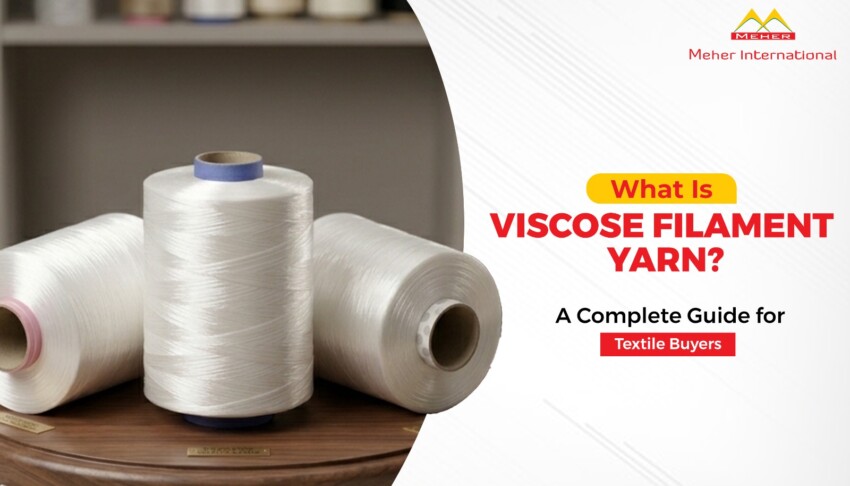
The textile industry is constantly balancing three things: appearance, performance, and cost.
Buyers are not simply looking for a yarn that can be woven or knitted. They want materials that help create fabrics with the right drape, softness, colour appearance, surface feel, and overall quality.
This is where viscose filament yarn has an important role to play.
Unlike spun viscose yarn, which is made from shorter fibres spun together, viscose filament yarn is produced as continuous filaments. This gives it a different surface character and makes it suitable for applications where smoothness, lustre, drape, and a more refined fabric appearance are important.
For textile buyers, understanding how viscose filament yarn is made, what its properties are, where it is used, and what to check before purchasing can make the sourcing process much easier.
What Is Viscose Filament Yarn?
Viscose filament yarn is a man-made cellulosic yarn produced from regenerated cellulose.
The cellulose generally comes from a plant-based source such as wood pulp. It is processed into a viscous solution, regenerated into continuous filaments, and then converted into yarn suitable for textile manufacturing.
The important word here is filament.
A filament yarn is made from continuous strands rather than short staple fibres. This gives viscose filament yarn a smooth and consistent appearance that can be quite different from conventional spun yarns.
Depending on the manufacturing process and yarn specification, viscose filament yarn can offer:
- Smooth surface
- Soft hand feel
- Attractive lustre
- Good drape
- Comfortable fabric touch
- Excellent colour appearance
- Continuous filament construction
- Versatility in textile applications
These characteristics make it particularly interesting for fashion, apparel, home textiles, and other applications where fabric appearance and feel matter.
How Is Viscose Filament Yarn Made?
Understanding the production process helps buyers understand why yarn quality can vary between suppliers.
Step 1: Cellulose Preparation
The process begins with cellulose obtained from suitable raw materials, commonly wood pulp.
The cellulose is processed to create a material that can be regenerated into fibres.
Step 2: Creating the Viscose Solution
The cellulose undergoes chemical processing to create a viscous solution.
This solution is then prepared for fibre formation.
Step 3: Filament Formation
The viscose solution is pushed through extremely small openings in a spinneret into a regeneration bath.
The material solidifies into continuous filaments.
Step 4: Washing and Finishing
The newly formed filaments undergo processes such as washing and finishing to remove unwanted residues and achieve the required characteristics.
Step 5: Yarn Formation
The continuous filaments are collected and processed into yarn according to the required specifications.
The final yarn can then be supplied for weaving, knitting, or other textile applications.
Key Properties of Viscose Filament Yarn
The popularity of viscose filament yarn comes from the combination of several properties rather than one single feature.
- Smooth and Refined Appearance
One of the most noticeable features of viscose filament yarn is its smooth appearance.
The continuous filament structure can create fabrics with a clean and refined surface, making the yarn attractive for fashion and premium-looking textile products.
- Soft Hand Feel
Viscose is well known for its soft and comfortable feel.
When used correctly, viscose filament yarn can contribute to fabrics that feel pleasant against the skin.
This makes it useful for apparel and other products where comfort is an important selling point.
- Excellent Drape
Fabric made using suitable viscose filament yarn can have an elegant drape.
This is particularly useful for garments where the fabric needs to fall naturally rather than appear stiff.
Applications can include:
- Dresses
- Blouses
- Scarves
- Fashion fabrics
- Flowing garments
- Decorative textiles
- Attractive Lustre
Viscose filament yarn can provide a natural-looking sheen depending on its specification and finishing.
This visual quality can add depth and sophistication to fabrics.
For fashion manufacturers, this can be valuable when the final product needs an elevated appearance without relying solely on surface embellishments.
- Good Colour Appearance
Viscose has good affinity for dyes, allowing manufacturers to create fabrics with attractive colour depth and appearance.
For textile buyers, this is important because colour consistency and visual appeal can directly influence the final product.
- Versatility
Viscose filament yarn can be used across different textile constructions and product categories.
The exact performance depends on the yarn specification, processing conditions, fabric construction, and finishing method.
Viscose Filament Yarn vs Spun Viscose Yarn
This is an important distinction for textile buyers.
Both materials are based on regenerated cellulose, but their construction is different.
Viscose filament yarn uses continuous filaments, while spun viscose yarn is produced from staple fibres.
This difference can affect the appearance and behaviour of the final fabric.
Filament yarn generally offers:
- Smoother surface
- More continuous appearance
- Lower tendency toward a fuzzy surface
- Refined drape
- Distinct visual character
Spun yarn, on the other hand, can provide a different texture and hand feel that may be preferred for certain products.
Therefore, neither is universally “better.”
The right choice depends on the fabric, product positioning, manufacturing process, and desired appearance.
Where Is Viscose Filament Yarn Used?
Viscose filament yarn has applications across several textile segments.
Fashion and Apparel
This is one of the most natural applications for viscose filament yarn.
Its combination of softness, drape, and appearance makes it suitable for fashion fabrics used in:
- Dresses
- Tops
- Blouses
- Skirts
- Scarves
- Fashion accessories
For brands focused on fluid silhouettes and comfortable fabrics, the yarn can be an attractive material option.
Home Textiles
Viscose filament yarn can also be considered for selected home textile applications.
Its appearance and soft feel can support products where aesthetics and touch are important.
Potential applications include decorative fabrics, furnishing materials, and other textile products depending on the required specifications.
Decorative and Premium Fabrics
Where visual appearance plays a major role, filament construction can offer a smooth and refined surface.
This makes viscose filament yarn relevant to fabrics positioned toward premium fashion and decorative textile markets.
Why Textile Buyers Choose Viscose Filament Yarn
From a buyer’s perspective, material selection is about the final product.
A yarn may look attractive on paper, but what matters is how it performs during production and how the finished fabric meets customer expectations.
Viscose filament yarn can be considered when buyers are looking for a combination of:
Softness + Drape + Appearance + Smoothness + Colour Appeal
It can therefore help textile manufacturers develop fabrics that feel comfortable while maintaining a polished visual character.
Is Viscose Filament Yarn Sustainable?
Sustainability is becoming an increasingly important factor in textile sourcing.
Viscose is a regenerated cellulosic fibre, meaning its cellulose feedstock originates from renewable biological sources.
However, it is important not to treat every viscose product as automatically sustainable.
The environmental profile can depend on factors such as:
- Source of cellulose
- Forestry practices
- Manufacturing technology
- Chemical management
- Energy consumption
- Water management
- Waste treatment
- Supplier certifications and traceability
For buyers, responsible sourcing therefore matters.
Instead of asking only whether a yarn is “eco-friendly,” businesses should ask suppliers for clear information about the material’s origin, manufacturing process, certifications, and sustainability practices.
What Should Textile Buyers Check Before Buying?
Choosing a viscose filament yarn requires more than checking the price per kilogram.
The yarn specification should match the intended application.
- Yarn Count
Check whether the yarn count is appropriate for the intended fabric construction and manufacturing process.
- Filament Specification
The number and characteristics of filaments can influence the appearance, feel, and performance of the final fabric.
- Tenacity and Elongation
Mechanical properties such as tenacity and elongation are important for understanding how the yarn will behave during processing.
- Uniformity
Yarn consistency matters.
Variation in yarn characteristics can affect weaving, knitting, dyeing, fabric appearance, and production efficiency.
- Colour and Dyeing Requirements
If the yarn is supplied dyed or is intended for a specific colour application, buyers should clarify colour requirements and consistency expectations.
- Packaging and Handling
Proper packaging helps protect yarn during storage and transportation.
Buyers should also consider moisture protection and handling conditions.
- Supplier Reliability
A good yarn is only useful if it can be supplied consistently.
Before choosing a supplier, consider:
- Product consistency
- Supply capacity
- Delivery reliability
- Export experience
- Documentation
- Communication
- Ability to meet specifications
Common Questions About Viscose Filament Yarn
Is viscose filament yarn a natural yarn?
Not exactly.
Viscose starts with naturally derived cellulose, but the cellulose is chemically processed and regenerated into a man-made fibre. It is therefore generally classified as a regenerated cellulosic fibre.
Is viscose filament yarn suitable for premium fabrics?
It can be, particularly where softness, drape, smoothness, and visual appearance are important.
The final quality depends on yarn specification, fabric construction, dyeing, finishing, and manufacturing quality.
What is the difference between viscose and polyester filament yarn?
Both can be supplied as filament yarns, but they have different fibre chemistries and performance characteristics.
Viscose is a regenerated cellulosic material valued for softness, drape, and appearance, while polyester is a synthetic polymer fibre known for properties such as strength, durability, and dimensional stability.
The appropriate choice depends on the intended fabric and end use.
People may also search eco-friendly viscose filament yarn: Viscose Filament Yarn: The Future of Eco-Friendly Fashion
Why Meher International for Quality Yarn Sourcing?
For textile manufacturers and buyers, sourcing is not just about finding a product.
It is about finding a supplier who can understand requirements and support consistent procurement.
Meher International provides yarn and polymer solutions for businesses looking for reliable materials across textile and industrial applications.
For buyers exploring viscose filament yarn and other specialized yarn solutions, a broader product portfolio can make it easier to identify materials according to fabric requirements, application, quality expectations, and commercial needs.
What Makes Meher International a Strong Sourcing Partner?
- Diverse yarn and polymer portfolio
- Solutions for textile and industrial applications
- International sourcing capabilities
- Focus on product consistency
- Business-oriented supply support
- Professional communication
- Support for different material requirements
Whether you are developing a new fabric collection, sourcing yarn for regular production, or evaluating alternatives for a specific textile application, choosing the right yarn supplier can make the process more efficient.
Why Meher International Is the Right Choice for Your Yarn Requirements
The right yarn can influence much more than the production process.
It can affect the look, touch, drape, durability, and overall perception of the finished fabric.
Viscose filament yarn is an excellent example of how yarn selection can help manufacturers achieve a specific textile character.
For businesses seeking reliable yarn sourcing, Meher International offers a diversified portfolio designed to serve modern textile and industrial requirements.
From viscose filament yarn to technical and performance-oriented yarn solutions, the focus remains on connecting businesses with suitable materials for their applications.
Choose Meher International when you need:
- Quality-focused yarn sourcing
- Diverse textile material options
- Reliable international supply
- Application-oriented product selection
- Consistent business support
- Industrial and specialized yarn solutions
Final Thoughts
Viscose filament yarn offers textile manufacturers an appealing combination of smoothness, softness, drape, lustre, and colour appeal.
Its continuous filament structure gives it a distinct character compared with spun viscose yarn, making it suitable for fashion, apparel, decorative, and selected premium textile applications.
But successful textile production begins with choosing the right specification.
For buyers, factors such as yarn count, filament characteristics, tenacity, elongation, uniformity, dyeing requirements, packaging, and supplier reliability should all be considered before placing an order.
And when sourcing matters, the supplier matters too.
Meher International helps businesses explore yarn and polymer solutions for evolving textile and industrial needs.
Looking for the right viscose filament yarn or specialized yarn solution for your next textile project?
Connect with Meher International today and source yarn solutions that match your quality, application, and business requirements.
🌐 Visit: www.meherinternational.com
📧 Email: info@meherinternational.com
📞 Call: +91 261 2328237
📍Address:- 8003 – World Trade Centre, Ring Road, Surat – 395 002, Gujarat, India.
