

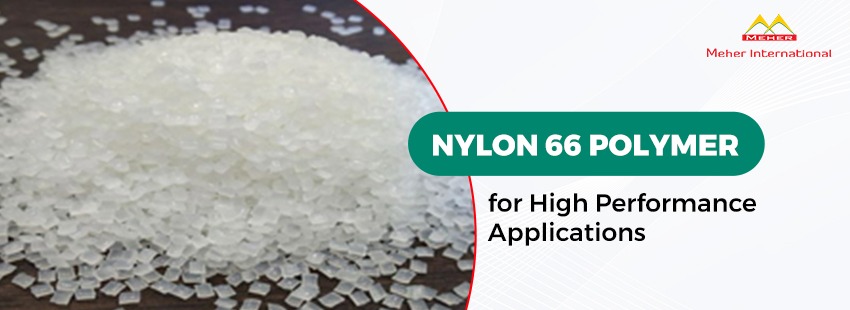
In the world of advanced engineering materials, strength, durability, heat resistance, and reliability are essential. Industries today require materials that can withstand extreme pressure, high temperatures, continuous mechanical stress, and demanding environments without compromising performance.
One material that consistently stands out in high-performance applications is Nylon 66 polymer, also known as Polyamide 66 (PA66).
Known for its exceptional mechanical strength and thermal stability, Nylon 66 has become a preferred engineering plastic across industries such as automotive, industrial manufacturing, textiles, electronics, aerospace, and consumer products.
As global industries continue moving toward lightweight and durable materials, companies like Meher International are helping businesses source reliable high-performance polymers and advanced textile materials for industrial applications.
This complete guide explores Nylon 66 polymer properties, advantages, applications, and why it continues to lead in high-performance engineering solutions.
What is Nylon 66 Polymer?
Nylon 66 is a synthetic thermoplastic polymer from the polyamide family.
It is produced through the polymerization of:
- Hexamethylene diamine
- Adipic acid
The “66” in Nylon 66 refers to the six carbon atoms present in both chemical components.
This molecular structure creates stronger intermolecular bonding compared to many other engineering polymers, giving Nylon 66 superior strength and thermal performance.
Why Nylon 66 is Considered a High-Performance Polymer
Nylon 66 is widely recognized for its balanced combination of:
- Mechanical strength
- Heat resistance
- Wear resistance
- Dimensional stability
- Chemical resistance
These characteristics make it suitable for highly demanding industrial environments.
Key Properties of Nylon 66 Polymer
The popularity of Polyamide 66 comes from its excellent performance properties.
- Superior Mechanical Strength
One of the biggest advantages of Nylon 66 polymer is its outstanding tensile strength.
It performs exceptionally well under:
- Heavy loads
- Continuous stress
- Repeated mechanical movement
This makes it ideal for structural and industrial applications.
- High Heat Resistance
Nylon 66 can withstand higher temperatures compared to many other engineering plastics.
This property is especially important in:
- Automotive systems
- Industrial machinery
- Electrical applications
Its thermal stability allows reliable performance even under demanding operating conditions.
- Excellent Wear and Abrasion Resistance
Nylon 66 resists surface wear caused by friction and repeated movement.
Applications benefiting from this property include:
- Gears
- Bearings
- Conveyor systems
- Industrial textiles
The material’s durability improves product lifespan and reduces maintenance requirements.
- Strong Chemical Resistance
Polyamide 66 offers resistance against:
- Oils
- Greases
- Industrial chemicals
- Fuels
This makes it suitable for harsh industrial environments.
- Dimensional Stability
Nylon 66 maintains its shape and structural integrity even under mechanical stress and elevated temperatures.
This property is critical in precision engineering applications.
- Lightweight Performance
Modern industries seek materials that reduce weight without sacrificing durability.
Nylon 66 provides:
- High strength-to-weight ratio
- Better fuel efficiency
- Easier product handling
This is particularly valuable in automotive and aerospace sectors.
- Good Electrical Insulation Properties
Nylon 66 also performs well as an electrical insulating material.
Applications include:
- Electrical connectors
- Cable components
- Electronic housings
Nylon 66 vs Nylon 6: Understanding the Difference
Although both materials belong to the polyamide family, Nylon 66 generally offers:
- Higher strength
- Better heat resistance
- Improved wear resistance
- Greater dimensional stability
Meanwhile, Nylon 6 often provides:
- Better flexibility
- Easier processing
- Higher impact resistance in some applications
The choice depends on the intended industrial application.
People also may know about Nylon 66 vs Nylon 6: Nylon 6 vs Nylon 66: Key Differences Every Textile Buyer Should Know
How Nylon 66 is Manufactured
The manufacturing process involves chemical polymerization followed by processing into usable forms.
Main Production Steps
Polymerization
Hexamethylene diamine and adipic acid react to form polymer chains.
Cooling and Pellet Formation
The polymer is cooled and converted into pellets or granules.
Industrial Processing
The material is then processed into:
- Fibers
- Engineering plastic parts
- Industrial yarns
- Textile materials
Strict quality control ensures consistent performance.
Applications of Nylon 66 Polymer
Nylon 66 is widely used across multiple industries because of its versatility and durability.
- Automotive Industry
The automotive sector is one of the largest users of Nylon 66.
Common Automotive Applications
- Engine covers
- Air intake manifolds
- Fuel system components
- Radiator parts
- Cable ties
Its heat resistance and lightweight properties help improve vehicle performance and fuel efficiency.
- Textile Industry
Nylon 66 is widely used in textile manufacturing because of its strength and abrasion resistance.
Textile Applications Include:
- Industrial yarns
- Technical textiles
- Performance fabrics
- Industrial sewing threads
Its durability improves textile lifespan and reliability.
- Engineering Plastics
Polyamide 66 is ideal for precision engineering applications.
Common Uses Include:
- Gears
- Bearings
- Bushings
- Machine components
These parts benefit from excellent wear resistance and dimensional stability.
- Electrical and Electronics Industry
Nylon 66 is used in electrical systems because of its insulation properties and heat resistance.
Applications include:
- Switch housings
- Connectors
- Cable insulation components
- Industrial Manufacturing
Many industrial products rely on Nylon 66 for structural performance.
Examples Include:
- Conveyor systems
- Industrial rollers
- Mechanical parts
- Heavy-duty components
- Consumer Products
Nylon 66 is also found in:
- Sports equipment
- Power tools
- Home appliances
- Luggage products
Advantages of Using High-Quality Nylon 66
Manufacturers prefer high-quality Nylon 66 because it offers long-term industrial benefits.
Improved Product Reliability
Superior material strength improves product durability.
Better Operational Performance
High-performance polymers help reduce equipment failures.
Reduced Maintenance Costs
Durable components require fewer replacements.
Enhanced Manufacturing Efficiency
Consistent material quality improves production stability.
Support for Lightweight Design
Helps industries develop lighter yet stronger products.
Importance of Quality Control in Nylon 66 Manufacturing
Quality control is essential for maintaining consistent material performance.
Key testing parameters include:
- Tensile strength
- Moisture content
- Thermal stability
- Melt flow behavior
- Impact resistance
Reliable testing helps manufacturers maintain industrial standards and product consistency.
Common Testing Methods for Nylon 66
Tensile Testing
Measures strength and elongation properties.
Thermal Testing
Evaluates heat resistance and melting behavior.
Moisture Analysis
Monitors water absorption levels.
Impact Resistance Testing
Measures the ability to absorb mechanical shock.
Future Trends in Nylon 66 Applications
The future of engineering plastics is evolving rapidly.
Emerging Trends Include:
- Lightweight automotive materials
- Sustainable polymer solutions
- Advanced industrial textiles
- Smart manufacturing components
- High-performance technical materials
Nylon 66 is expected to remain a key material in industrial innovation because of its reliability and versatility.
Importance of Reliable Polymer Suppliers
Choosing the right material supplier is critical for industrial manufacturers.
Reliable suppliers help ensure:
- Consistent product quality
- Stable supply chains
- Technical material support
- Global delivery reliability
Strong supplier partnerships reduce operational risks and improve production efficiency.
How Meher International Supports Industrial Manufacturers
Meher International supplies advanced engineering polymers and textile materials for industrial applications worldwide.
The company supports businesses with reliable sourcing solutions for Nylon 66 polymers and technical textile products.
Core Services Offered by Meher International
Engineering Polymer Supply
- Nylon 66 polymer sourcing
- Technical textile materials
- Industrial polymer solutions
Industrial Yarn Solutions
- High-performance yarn sourcing
- Technical textile support
- Industrial textile materials
Global Export Services
- International logistics management
- Export documentation support
- Reliable worldwide delivery systems
Benefits of Choosing Meher International
Consistent Product Quality
Reliable sourcing ensures better industrial performance and production stability.
Strong Global Supply Network
Efficient sourcing and delivery across international markets.
Technical Expertise
Understanding of engineering plastics and industrial textile applications.
Competitive Pricing
Cost-effective sourcing solutions for industrial manufacturers.
Why Meher International Best for Best Yarn?
When businesses require dependable engineering polymers and advanced textile solutions, Meher International provides trusted global sourcing support.
Core Services
- Nylon 66 polymer sourcing
- Technical textile material supply
- Industrial yarn solutions
- Global export and logistics support
Key Benefits
- Reliable material quality
- Strong international supply network
- Technical sourcing expertise
- Competitive global pricing
Features That Make Meher International Stand Out
- Wide industrial material portfolio
- Export-ready packaging standards
- Responsive customer support
- Long-term business partnerships
Meher International helps businesses achieve durability, performance, and manufacturing excellence with confidence.
Final Thoughts
Nylon 66 polymer continues to lead high-performance applications because of its superior strength, thermal stability, wear resistance, and industrial versatility.
From automotive engineering and industrial manufacturing to textiles and electrical systems, Polyamide 66 remains one of the most trusted engineering plastics in the world.
As industries continue demanding lighter, stronger, and more reliable materials, Nylon 66 will continue driving innovation across multiple sectors.
Choose Meher International for Advanced Nylon Solutions
Partner with Meher International for high-quality Nylon 66 polymers and advanced industrial textile solutions tailored for modern manufacturing needs.
Improve industrial performance.
Enhance product durability.
Build reliable engineering solutions.
Contact Meher International today to discover premium polymer and yarn solutions for your business.
🌐 Visit: www.meherinternational.com
📧 Email: info@meherinternational.com
📞 Call: +91 261 2328237
📍Address:- 8003 – World Trade Centre, Ring Road, Surat – 395 002, Gujarat, India.
