

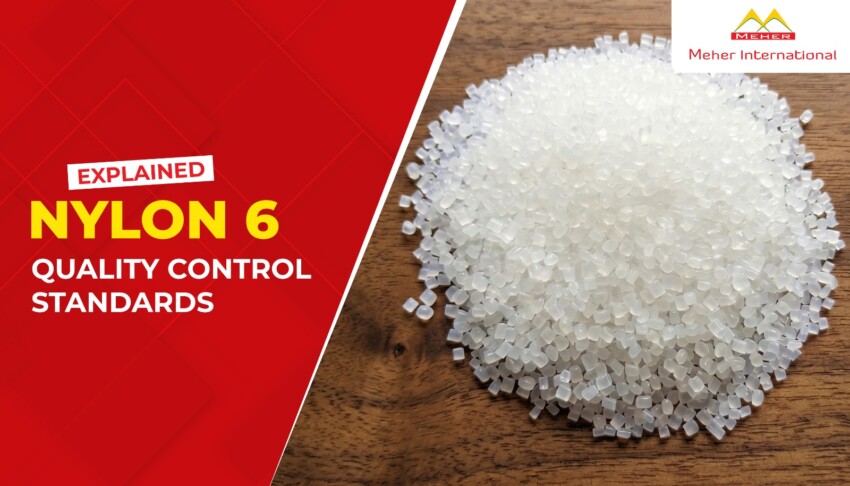
In today’s competitive manufacturing landscape, quality is no longer optional — it is essential. Industries using Nylon 6 polymer require materials that deliver consistent performance, durability, and reliability across applications ranging from textiles and engineering plastics to automotive and industrial manufacturing.
For manufacturers, maintaining strict quality control standards for Nylon 6 is critical to ensuring product consistency, reducing defects, and meeting international industry requirements.
Whether Nylon 6 is used in yarn production, engineering plastics, industrial textiles, or technical components, proper polymer testing and certification help guarantee long-term performance and customer satisfaction.
Companies like Meher International understand the importance of sourcing reliable, high-quality polymer materials that meet global standards and industrial expectations.
This article explores the essential quality control standards, testing methods, certifications, and best practices manufacturers should know about Nylon 6 polymer.
What is Nylon 6 Polymer?
Nylon 6 is a synthetic thermoplastic polymer belonging to the polyamide family.
It is produced through the polymerization of caprolactam and is widely used because of its:
- High mechanical strength
- Flexibility
- Abrasion resistance
- Chemical resistance
- Lightweight durability
Nylon 6 is commonly used in:
- Textile yarns
- Industrial fibers
- Engineering plastics
- Automotive components
- Packaging materials
Its versatility makes it one of the most widely used engineering polymers globally.
Why Quality Control Matters for Nylon 6
The performance of Nylon 6 products depends heavily on material consistency and processing quality.
Poor-quality polymer materials can lead to:
- Product failure
- Reduced durability
- Inconsistent textile performance
- Manufacturing defects
- Increased production waste
Quality control ensures the polymer meets required standards before entering manufacturing processes.
Understanding Nylon 6 Quality Standards
Quality standards help manufacturers maintain consistency across production batches and ensure the material performs according to industry expectations.
These standards cover:
- Mechanical properties
- Thermal performance
- Chemical resistance
- Moisture behavior
- Processing consistency
Manufacturers rely on international standards and testing protocols to maintain product quality.
Key Quality Parameters for Nylon 6 Polymer
Several important parameters are monitored during Nylon 6 quality testing.
- Viscosity Measurement
Viscosity indicates the flow behavior of the polymer during processing.
Consistent viscosity is critical for:
- Injection molding
- Extrusion
- Fiber spinning
- Textile yarn production
Variations in viscosity can affect final product quality and dimensional stability.
- Moisture Content
Nylon 6 naturally absorbs moisture from the environment.
Excess moisture can cause:
- Processing defects
- Surface imperfections
- Reduced mechanical strength
Proper drying and moisture testing are essential before manufacturing.
- Tensile Strength
Tensile strength measures the polymer’s ability to withstand pulling force before breaking.
High tensile strength is important for:
- Industrial yarns
- Engineering applications
- Technical textiles
- Elongation Properties
Elongation determines how much the material can stretch before breaking.
Balanced elongation improves:
- Flexibility
- Impact resistance
- Textile durability
- Thermal Stability
Nylon 6 must maintain stability under elevated temperatures.
Thermal testing helps evaluate:
- Melting behavior
- Heat resistance
- Processing performance
This is especially important in industrial and automotive applications.
- Chemical Resistance
Nylon 6 materials are often exposed to oils, chemicals, and industrial environments.
Chemical resistance testing ensures the material can withstand harsh operating conditions.
Common Polymer Testing Methods for Nylon 6
Modern quality control systems use advanced testing methods to evaluate polymer performance.
Tensile Testing
Measures:
- Strength
- Elongation
- Breaking force
This helps determine overall mechanical performance.
Melt Flow Index Testing
Evaluates polymer flow behavior during processing.
Important for:
- Injection molding
- Fiber production
- Extrusion consistency
Moisture Analysis
Measures moisture absorption levels in the polymer.
Helps prevent processing defects.
Thermal Testing
Used to evaluate:
-
- Heat resistance
- Melting temperature
- Thermal stability
Impact Resistance Testing
Measures how well the material absorbs sudden force or shock.
Important for engineering applications.
ISO Standards for Nylon 6 Polymer
International quality certifications help manufacturers maintain global production standards.
Several ISO nylon standards are relevant to Nylon 6 quality control.
ISO 9001
Focuses on quality management systems and process consistency.
ISO 527
Defines standards for tensile testing of plastics and polymers.
ISO 1133
Specifies melt flow rate testing procedures for thermoplastics.
ISO 62
Covers moisture absorption testing methods.
ISO 178
Used for flexural property testing of plastics.
Importance of Nylon Certification
Certification helps manufacturers demonstrate product quality and reliability.
Benefits include:
- Better customer confidence
- Compliance with international regulations
- Improved export opportunities
- Consistent industrial performance
Certified materials are often preferred in industries such as:
- Automotive
- Aerospace
- Textile manufacturing
- Electronics
Quality Challenges in Nylon 6 Manufacturing
Maintaining consistent Nylon 6 quality can be challenging due to several factors.
Moisture Sensitivity
Nylon 6 absorbs moisture easily, affecting processing behavior.
Processing Variations
Temperature fluctuations and incorrect processing parameters can affect material performance.
Raw Material Consistency
Variations in polymer quality can impact final product reliability.
Contamination Risks
Foreign particles or impurities may weaken polymer performance.
People also may want to know about that Nylon 6: Nylon 6 – Future of High-Performance Manufacturing & Importance
Importance of Process Control
Strict process control is essential throughout Nylon 6 production and handling.
Manufacturers focus on:
- Raw material inspection
- Controlled storage conditions
- Accurate processing temperatures
- Continuous testing and monitoring
These practices help maintain stable product quality.
Applications of High-Quality Nylon 6 Polymer
High-quality Nylon 6 is used in multiple industries.
Textile Industry
Used in:
- Industrial yarns
- Technical textiles
- Sportswear fabrics
- Performance apparel
Automotive Industry
Applications include:
- Engine components
- Interior parts
- Reinforcement materials
Engineering Plastics
Used for:
- Gears
- Bearings
- Industrial machine components
Consumer Products
Found in:
- Packaging materials
- Household products
- Electrical components
Role of Reliable Polymer Suppliers
For manufacturers, choosing the right supplier is just as important as selecting the right material.
Reliable suppliers help ensure:
- Consistent polymer quality
- Timely deliveries
- Technical support
- Global supply reliability
Strong supplier partnerships improve production efficiency and reduce operational risks.
How Meher International Supports Quality-Focused Manufacturing
Meher International supplies advanced textile materials and engineering polymers that support industrial quality standards.
The company helps manufacturers source reliable Nylon 6 materials and technical textile solutions for global applications.
Core Services Offered by Meher International
Engineering Polymer Supply
- Nylon 6 polymer sourcing
- Technical textile materials
- Industrial polymer solutions
Textile and Industrial Yarn Support
- High-performance yarn sourcing
- Industrial textile material solutions
- Technical yarn assistance
Global Export Solutions
- International logistics management
- Export documentation support
- Reliable worldwide delivery systems
Benefits of Choosing Meher International
Consistent Product Quality
Reliable sourcing supports stable production and industrial performance.
Strong Global Supply Network
Efficient sourcing and delivery capabilities across international markets.
Technical Material Expertise
Understanding of textile applications and engineering polymer requirements.
Competitive Pricing
Cost-effective sourcing solutions for industrial manufacturers.
Future Trends in Nylon Quality Control
The future of polymer manufacturing is becoming increasingly advanced and data-driven.
Emerging Trends Include:
- Automated quality monitoring systems
- Smart polymer testing technologies
- Sustainable Nylon materials
- AI-driven production quality analysis
- Advanced industrial certifications
Manufacturers who prioritize quality control will remain more competitive in global markets.
Why Meher International Best for Best Yarn?
When businesses need reliable polymer and yarn solutions, Meher International delivers trusted sourcing support.
Core Services
- Nylon 6 polymer sourcing
- Technical textile material supply
- Industrial yarn solutions
- Global export and logistics support
Key Benefits
- Reliable product quality
- Strong international supply network
- Technical sourcing expertise
- Competitive global pricing
Features That Make Meher International Stand Out
- Wide industrial material portfolio
- Export-ready packaging standards
- Responsive customer support
- Long-term business partnerships
Meher International helps manufacturers maintain quality, consistency, and industrial performance with confidence.
Final Thoughts
Quality control standards for Nylon 6 polymer play a critical role in ensuring product reliability, manufacturing efficiency, and industrial performance.
From polymer testing and ISO certifications to moisture analysis and tensile testing, every quality parameter contributes to better end-product performance.
As industries continue demanding higher-quality engineering materials, manufacturers must work with reliable suppliers who understand both technical standards and global supply requirements.
Choose Meher International for Reliable Nylon Solutions
Partner with Meher International for high-quality Nylon 6 polymers and advanced textile material solutions tailored for industrial applications.
Improve product consistency.
Enhance manufacturing quality.
Build durable industrial solutions.
Contact Meher International today to discover dependable polymer and yarn solutions for your business.
🌐 Visit: www.meherinternational.com
📧 Email: info@meherinternational.com
📞 Call: +91 261 2328237
📍Address:- 8003 – World Trade Centre, Ring Road, Surat – 395 002, Gujarat, India.
