

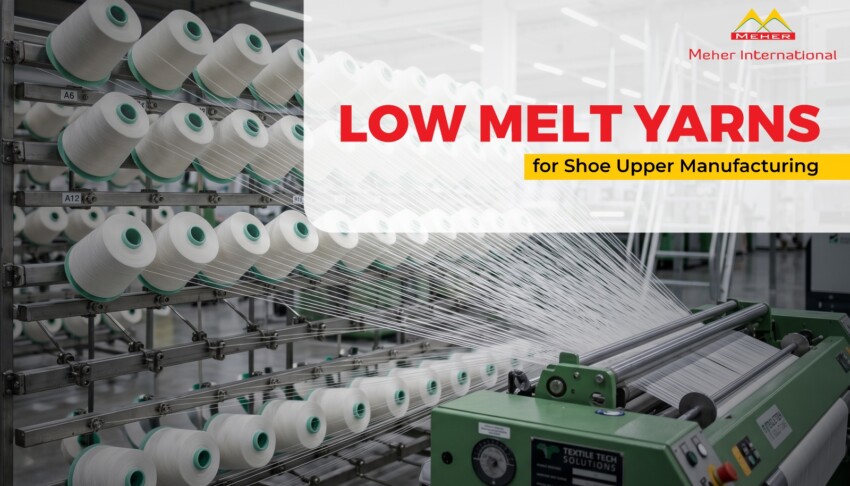
The footwear industry has transformed dramatically in recent years. Modern consumers expect shoes that are lightweight, durable, breathable, stylish, and comfortable — all while manufacturers aim for faster production and cost efficiency.
To meet these demands, textile innovation has become a driving force in footwear manufacturing. Among the most important innovations is low melt yarn, a specialized thermoplastic yarn that is revolutionizing how shoe uppers are designed and produced.
From sports shoes and sneakers to industrial footwear and safety shoes, low melt yarn has become a preferred material for creating high-performance shoe uppers with better flexibility, structure, and durability.
Companies like Meher International are helping footwear manufacturers source advanced yarn solutions that support modern production requirements and technical textile applications.
This article explores how low melt yarn works, its advantages, applications in shoe upper manufacturing, and why it is becoming essential in the future of footwear textiles.
What is Low Melt Yarn?
Low melt yarn is a type of thermoplastic yarn engineered to melt at lower temperatures compared to standard polyester or nylon yarns.
When exposed to controlled heat during manufacturing, the outer layer of the yarn softens and bonds with surrounding fibers without damaging the core structure.
This bonding property allows manufacturers to create fabrics with:
- Better structural stability
- Improved shape retention
- Enhanced durability
- Reduced need for adhesives
Low melt yarn is widely used in technical textile applications where thermal bonding is required.
Understanding Thermoplastic Yarn Technology
Thermoplastic yarns are designed to react to heat in a controlled way.
In shoe upper manufacturing, this technology helps bind textile layers together efficiently.
How It Works
- The yarn is integrated into knitted or woven shoe upper fabrics
- Heat is applied during manufacturing
- The low melting component softens and bonds the fibers
- The bonded structure creates strength and stability
This process improves production efficiency while reducing the need for chemical adhesives.
Why Low Melt Yarn is Important in Footwear Manufacturing
Modern footwear production focuses heavily on:
- Lightweight materials
- Breathability
- Comfort
- Durability
- Design flexibility
- Sustainable manufacturing
Traditional bonding methods often involve excessive adhesives and additional stitching, which can increase weight and production complexity.
Low melt yarn helps simplify the manufacturing process while improving overall product performance.
Key Properties of Low Melt Yarn
Low melt yarn offers several performance advantages that make it suitable for footwear manufacturing.
- Excellent Bonding Capability
The primary feature of low melt yarn is thermal bonding.
This allows fabrics to maintain structure without heavy adhesives.
Benefits Include:
- Improved fabric stability
- Better shape retention
- Stronger shoe upper construction
- Lightweight Performance
Modern footwear requires lightweight materials for enhanced comfort and mobility.
Low melt yarn contributes to lightweight textile structures without compromising durability.
- Flexibility and Comfort
Despite strong bonding capabilities, low melt yarn maintains flexibility.
This improves:
- Foot movement
- Wearer comfort
- Fit adaptability
- Enhanced Durability
Thermally bonded fabrics resist:
- Deformation
- Repeated stress
- Wear and tear
This improves the lifespan of footwear products.
- Improved Production Efficiency
Low melt yarn reduces dependency on:
- Heavy adhesives
- Additional stitching
- Complex assembly methods
This helps manufacturers streamline production processes.
Applications of Low Melt Yarn in Shoe Upper Manufacturing
The footwear industry is one of the largest users of low melt yarn technology.
- Sports Shoes and Sneakers
Athletic footwear requires:
- Lightweight construction
- Breathability
- Flexibility
- Durability
Low melt yarn helps create seamless and supportive shoe uppers that improve comfort and performance.
Common Applications
- Running shoes
- Training shoes
- Lifestyle sneakers
- Performance footwear
- Knitted Shoe Uppers
Knitted uppers have become highly popular in modern footwear design.
Low melt yarn supports:
- Seamless construction
- Better structural integrity
- Lightweight flexibility
This enables innovative shoe designs with reduced material waste.
- Safety and Industrial Footwear
Industrial footwear must provide durability and support under harsh conditions.
Low melt yarn enhances:
- Fabric reinforcement
- Shape stability
- Long-term wear resistance
These properties improve the reliability of industrial shoes.
- Outdoor and Hiking Footwear
Outdoor shoes require materials that can handle repeated stress and environmental exposure.
Low melt yarn helps improve:
- Abrasion resistance
- Structural support
- Long-lasting performance
Advantages of Low Melt Yarn Over Traditional Bonding Methods
Low melt yarn technology offers multiple advantages compared to traditional footwear manufacturing techniques.
Reduced Adhesive Usage
Thermal bonding reduces dependency on chemical adhesives.
Benefits Include:
- Cleaner production processes
- Lower material usage
- Improved sustainability
Better Design Flexibility
Manufacturers can create modern and lightweight designs with greater precision.
Faster Production Processes
Heat bonding simplifies assembly and improves manufacturing efficiency.
Improved Product Consistency
Thermal bonding creates more uniform fabric structures.
Role of Low Melt Yarn in Sustainable Footwear Manufacturing
Sustainability is becoming a major focus in the footwear industry.
Brands are searching for materials and processes that reduce environmental impact.
Low melt yarn contributes to sustainability by helping reduce:
- Adhesive consumption
- Excess material usage
- Manufacturing waste
Lightweight footwear materials also help reduce transportation weight and improve energy efficiency.
Growing Demand for Technical Footwear Textiles
The global footwear industry is rapidly adopting technical textile innovations.
Key market trends include:
- Seamless shoe uppers
- Lightweight performance footwear
- Smart textile integration
- Sustainable production methods
- Advanced knitted structures
This growth is increasing demand for:
- Low melt yarn suppliers
- Thermoplastic yarn manufacturers
- Technical textile materials
People may ask for Durable, High-Performance Textiles: Low Melt Yarn: The Hidden Hero behind Durable, High-Performance Textiles
Importance of Reliable Yarn Suppliers
For footwear manufacturers, sourcing quality yarn is critical.
Reliable suppliers help ensure:
- Consistent product quality
- Stable production performance
- Timely deliveries
- Technical material expertise
Choosing the right yarn supplier directly impacts footwear quality and manufacturing efficiency.
How Meher International Supports Footwear Manufacturing
Meher International supplies advanced textile materials and technical yarn solutions for modern footwear manufacturing.
The company supports businesses with reliable sourcing and global textile supply solutions.
Core Services Offered by Meher International
Technical Yarn Supply
- Low melt yarn sourcing
- Thermoplastic yarn solutions
- Shoe upper textile materials
- Industrial yarn support
Global Export Solutions
- International logistics support
- Export documentation management
- Reliable global delivery systems
Industry-Focused Material Assistance
Helping manufacturers select suitable yarns for footwear and technical textile applications.
Benefits of Choosing Meher International
Consistent Product Quality
Reliable sourcing supports stable production and better product performance.
Strong Supply Network
Efficient sourcing and international delivery capabilities.
Technical Understanding
Knowledge of footwear textile requirements and advanced yarn technologies.
Competitive Pricing
Cost-effective solutions for global buyers and manufacturers.
Future Trends in Shoe Upper Manufacturing
The footwear industry continues to evolve with advanced textile technologies.
Emerging Trends Include:
- Seamless knitted footwear
- Smart performance textiles
- Sustainable shoe manufacturing
- Lightweight structural fabrics
- Advanced thermal bonding technologies
Low melt yarn is expected to play a major role in shaping the future of footwear production.
Why Meher International Best for Best Yarn?
When businesses need advanced textile solutions for footwear manufacturing, Meher International delivers trusted yarn sourcing solutions.
Core Services
- Low melt yarn supply
- Thermoplastic yarn sourcing
- Shoe upper textile material solutions
- Global export and logistics support
Key Benefits
- Reliable yarn quality
- Strong international supply network
- Technical sourcing expertise
- Competitive global pricing
Features That Make Meher International Stand Out
- Wide technical yarn portfolio
- Export-ready packaging standards
- Responsive customer support
- Long-term business partnerships
Meher International helps footwear manufacturers build stronger, lighter, and more innovative shoe products.
Final Thoughts
Low melt yarn is transforming modern footwear manufacturing by enabling lightweight, durable, and high-performance shoe upper construction.
Its thermal bonding capabilities, flexibility, and production efficiency make it one of the most important innovations in technical textile applications for footwear.
As global footwear trends continue moving toward performance, sustainability, and advanced design, low melt yarn will remain a key material driving industry innovation.
Choose Meher International for Advanced Footwear Yarn Solutions
Partner with Meher International for premium low melt yarn and technical textile solutions tailored for footwear manufacturing.
Enhance production efficiency.
Improve footwear durability.
Create next-generation shoe upper designs.
Contact Meher International today to discover reliable yarn solutions for your footwear business.
🌐 Visit: www.meherinternational.com
📧 Email: info@meherinternational.com
📞 Call: +91 261 2328237
📍Address:- 8003 – World Trade Centre, Ring Road, Surat – 395 002, Gujarat, India.
