

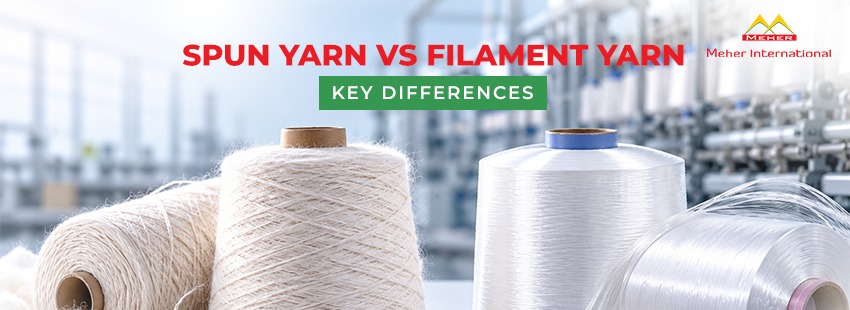
Although both yarn types are used in textile production, their structures create differences in appearance, feel and performance. Understanding these differences helps manufacturers select materials that match their product requirements.
| Feature | Filament Yarn | Spun Yarn |
| Structure | Made from continuous filaments | Made from shorter fibres held together |
| Surface | Often smooth; may also be textured | Typically has a more fibrous surface |
| Appearance | Can be lustrous, uniform or textured | Often has a matte or natural appearance |
| Strength | Depends on fibre, filament construction and yarn design | Depends on fibre properties, twist and spinning method |
| Hairiness | Generally lower in smooth filament yarns | Usually more surface hairiness |
| Softness | Depends on filament type and texturing | Often provides a familiar, cotton-like or natural feel |
| Moisture behaviour | Depends on the material and yarn construction | Depends on the fibre composition and construction |
| Common materials | Polyester, nylon, viscose filament and silk | Cotton, polyester staple, viscose staple and blends |
| Typical uses | Performance apparel, linings, fashion and technical textiles | Casual clothing, home textiles and everyday fabrics |
These are general comparisons rather than absolute rules. Textured filament yarns can have a bulky, soft feel, while specially engineered spun yarns can offer excellent strength and uniformity.
1. Strength and Durability
Strength is an important consideration when selecting yarn for a particular application.
Continuous filament yarns can provide good tensile performance because their fibres extend along the yarn’s length. However, actual strength depends on the material, filament characteristics and yarn construction.
Spun yarn strength depends on factors such as fibre length, fibre strength, twist and spinning method. The way shorter fibres overlap and grip one another plays an important role in holding the yarn together.
For example, a manufacturer producing durable synthetic fabrics may consider polyester filament yarn, while a producer of everyday cotton garments may prefer cotton spun yarn for its desired feel and appearance.
Which is better? Neither type is automatically superior. The correct choice depends on the required strength, fabric structure, end use and testing standards.
2. Softness, Texture and Fabric Feel
The feel of a finished fabric can strongly influence a customer’s purchasing decision.
Spun yarn often creates a familiar, fibrous surface that suits casual clothing, cotton-rich fabrics and everyday textiles. Cotton spun yarn is particularly popular for products where comfort and a natural touch are priorities.
Filament yarn can create smooth, sleek fabrics with a more uniform surface. Textured filament yarns, such as DTY, can also provide bulk, flexibility and a softer feel.
For premium apparel, the decision should consider the desired drape, surface texture, comfort and overall design rather than simply choosing one yarn category over another.
3. Appearance and Fabric Finish
Filament yarns are often selected for fabrics requiring a smooth surface, consistent appearance or a particular lustre. Depending on the construction, they can support sleek fashion fabrics, linings and specialised textile products.
Spun yarns are often chosen for fabrics with a more natural, matte or textured appearance.
The final finish also depends on fibre composition, fabric construction, dyeing and finishing treatments. For instance, a polyester filament yarn can be designed for a range of appearances, while a cotton spun yarn may be finished to achieve a smoother surface.
Manufacturers should therefore evaluate the fabric sample to ensure it matches the intended design.
4. Moisture Management and Comfort
Comfort depends on more than yarn structure. Fibre composition, fabric density, knit or weave design and finishing treatments all influence how a fabric handles moisture and heat.
Cotton spun yarn is commonly used in everyday clothing because cotton fibres absorb moisture. Polyester filament yarns can be engineered into fabrics designed for quick drying and moisture management, although their performance depends on the fabric design.
For sportswear and activewear, manufacturers should evaluate the complete fabric’s moisture transport, drying time, breathability and comfort.
For everyday apparel, the desired balance between softness, absorbency, weight and ease of care may be more important.
5. Production Efficiency and Cost
The cost of filament yarn and spun yarn depends on several variables, including raw material, manufacturing technology, yarn specifications, processing requirements and market conditions.
Filament yarn may offer processing advantages in applications suited to continuous fibres, while spun yarn requires staple-fibre preparation and spinning. However, overall manufacturing efficiency depends on the equipment, yarn quality and production process.
Buyers should consider more than the initial price per kilogram. Yarn breakage, machine compatibility, processing speed, fabric defects and finishing requirements can all affect total production cost.
The most economical option is the one that meets the product’s quality requirements while supporting efficient manufacturing.
How to Choose Between Filament Yarn and Spun Yarn
The right yarn depends on the product you intend to manufacture. Before placing an order, consider these practical factors.
1. Define Your End Application
Start by identifying the intended product.
- For smooth fashion fabrics and selected performance textiles, consider suitable filament yarns.
- For cotton-rich clothing and traditional everyday fabrics, consider spun yarn.
- For textured synthetic fabrics, evaluate textured filament yarn such as DTY.
- For blended fabrics, assess spun yarns made from suitable combinations of fibres.
These are starting points, not fixed rules. Both yarn categories serve a wide range of applications.
2. Choose the Right Fibre Composition
Polyester, cotton, viscose and nylon have different characteristics. Decide which properties matter most, such as strength, drape, softness, moisture behaviour or care requirements.
Also consider whether the product requires a single fibre type or a blend.
3. Check Technical Specifications
Before sourcing yarn, confirm the specifications relevant to your application, including:
- Yarn count or linear density
- Fibre or polymer composition
- Yarn strength and elongation
- Twist or filament construction
- Evenness and defect levels
- Colour or shade requirements, where applicable
For filament yarn, details such as denier, filament count and texturing may also be important. For spun yarn, count, spinning method and fibre characteristics may influence suitability.
4. Test Samples Before Bulk Purchasing
Request samples and evaluate them under the intended manufacturing conditions. Where possible, assess both yarn properties and the resulting fabric.
Testing helps determine whether the yarn meets your requirements for appearance, processing, durability and final performance.
5. Work with a Reliable Yarn Supplier
A knowledgeable supplier can help you compare product options, clarify specifications and identify suitable materials for your manufacturing process.
Consistent sourcing is especially important when a product requires repeat orders or long-term production planning.
People also want to know about future of Viscose Filament Yarn: The Future of Viscose Filament Yarn in Global Textile Market
Why Choose Meher International for Filament and Spun Yarn?
Selecting between filament yarn and spun yarn is easier when you have access to an appropriate product range and a supplier who understands textile sourcing requirements.
Meher International operates in the yarn, textile and polymer trading sector, supporting businesses looking for materials suited to different manufacturing applications.
A Diverse Range of Yarn Products
Meher International’s product portfolio includes polyester yarn, such as FDY and DTY, viscose filament yarn, cotton yarn, blended yarns, nylon yarn and specialty yarn varieties.
This range gives buyers the opportunity to explore different yarn categories according to their required composition, construction and end use. Availability and suitability should be confirmed for specific requirements.
Customized Yarn Solutions
Different textile applications require different specifications. Meher International offers customized yarn solutions based on requirements such as count, blend, twist and shade matching.
Whether your priority is fabric appearance, a particular yarn construction or consistency across repeat orders, discussing the application and technical requirements helps narrow down suitable options.
Industry Experience and Sourcing Support
Meher International has experience in domestic and international yarn and polymer markets. It is also an authorized channel partner of Jilin Chemical Fiber Group in India for selected viscose filament yarn products and associated brands.
For manufacturers and buyers, working with an experienced sourcing partner can help simplify product evaluation and support more informed purchasing decisions.
Explore the available products and learn more about the company at Meher International.
Frequently Asked Questions
1. What is the main difference between filament yarn and spun yarn?
Filament yarn consists of continuous strands of fibre, while spun yarn is made by twisting or consolidating shorter fibres. Their structures influence appearance, texture and performance.
2. Is filament yarn stronger than spun yarn?
Not always. Filament yarn can provide high tensile strength, but the result depends on the material and construction. Spun yarn strength depends on fibre properties, twist and spinning method.
3. Which yarn is better for clothing?
Both are widely used in clothing. Spun yarn is common in cotton-rich everyday garments, while filament yarn is used in sportswear, linings, fashion fabrics and many other applications. The right choice depends on the required comfort, appearance and performance.
4. Is polyester filament yarn suitable for sportswear?
Yes, polyester filament yarn is used in many sportswear applications. Textured and specially engineered constructions can support properties such as moisture management and quick drying when combined with suitable fabric design.
5. Can Meher International help me choose the right yarn?
Meher International offers a range of yarn products and customized solutions. You can contact the company to discuss your fibre, count, construction and application requirements.
Conclusion: Choose the Right Yarn for Better Textile Performance
Filament yarn and spun yarn each offer distinct advantages. Filament yarn can be suitable for smooth surfaces, continuous-fibre construction and selected performance applications, while spun yarn is widely valued for its versatility and familiar textile feel.
However, there is no single yarn type that is best for every product. Fibre composition, strength, texture, processing requirements, cost and end-use expectations should all guide the decision.
By understanding these differences and evaluating samples before bulk procurement, textile businesses can make better sourcing decisions and achieve more consistent manufacturing results.
Looking for the right yarn for your textile application?
Choose Meher International to explore a diverse range of filament, spun and specialty yarn options. With industry experience, customized sourcing support and a broad product portfolio, Meher International can help you assess suitable materials for your manufacturing needs.
Visit https://meherinternational.com/ to explore the product range and connect with the team about your yarn requirements.
Meher International — Connecting You to the Right Yarns & Polymers.
