

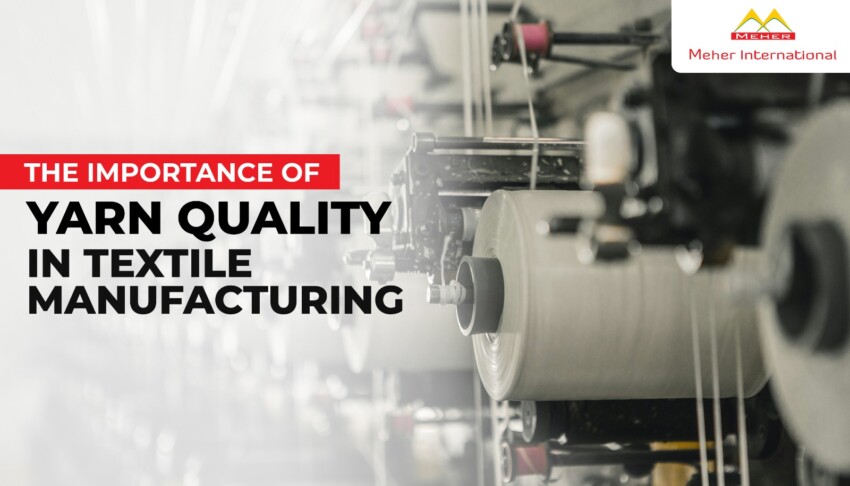
In the textile world, yarn is more than just a raw material — it is the foundation of every fabric. Whether it’s a soft cotton T-shirt, a durable denim fabric, a luxurious saree, or a technical textile used in industrial applications, yarn quality determines the strength, beauty, consistency, and life of the final product.
Today, with rapid advancements in textile technology, rising global competition, and increasing consumer expectations, the importance of high-quality yarn has become more critical than ever. Manufacturers are under pressure to deliver better fabrics, reduce waste, improve efficiency, and control production costs — all of which depend directly on yarn quality.
In this detailed guide, we will explore why yarn quality matters, which properties define a superior yarn, how it impacts manufacturing, and why businesses worldwide trust suppliers like Meher International for premium textile-grade yarns.
Understanding Yarn Quality
→ Before we discuss attributes and applications, we need to understand what the term “yarn quality” actually means.
→ Yarn quality refers to the overall performance, consistency, and physical characteristics of yarn that determine how well it behaves during textile processes such as weaving, knitting, dyeing, finishing, and garment production.
→ A high-quality yarn ensures:
- Fewer breakages
- Smoother machine operations
- Uniform fabric appearance
- Stronger and longer-lasting fabrics
- Higher productivity with minimal waste
→ On the other hand, low-quality yarn causes:
- Frequent yarn breaks
- Loom stoppages
- Uneven fabric texture
- Pilling, weak spots, and defects
- Higher production costs
- Poor final product quality
In simple words: Good yarn = good fabric. Bad yarn = big losses.
This is why yarn quality is considered the backbone of the textile supply chain.
Key Attributes of High-Quality Yarn
To understand what makes a yarn “premium,” we need to evaluate its physical and mechanical properties. Here are the most important quality parameters:
- Yarn Strength
→ Yarn must be able to withstand tension during high-speed weaving or knitting. High tensile strength ensures:
- Fewer yarn breaks
- Higher productivity
- Better durability in the final fabric
Inconsistent or weak yarn is the leading cause of loom stoppages.
- Uniformity & Evenness
→ A high-quality yarn will have minimal variations in:
- Thickness
- Weight
- Twist
- Density
Uniformity ensures the fabric looks smooth, consistent, and defect-free.
- Twist Level
→ Proper twist enhances:
- Strength
- Elasticity
- Aesthetic appearance
- Drape of the fabric
- Incorrect twist causes snarling, looping, or excessive hairiness.
4. Hairiness Control
→ Hairiness refers to the small fibers protruding from the yarn surface. Excessive hairiness leads to:
- Pilling
- Fuzziness
- Poor dye uptake
- Rough feel
Premium yarns have controlled hairiness for clean surfaces and strong fabric performance.
- Color Fastness Compatibility
→ A high-quality yarn absorbs dyes evenly, ensuring:
- Vibrant colors
- No patchiness
- Long-lasting shades
Poor-quality yarn may fade quickly, affecting brand reputation.
- Moisture Content & Conditioning
→ Proper moisture levels help yarn perform correctly during processing. Over-dry yarn causes:
- Static electricity
- Breakage
- Processing issues
Over-moist yarn affects weight uniformity and performance.
- Elongation & Recovery
→ A premium yarn stretches just enough to withstand stress without losing structure — essential for knitting and stretch fabrics.
- Cleanliness & Contamination-Free Quality
→ High-quality yarns have minimal:
- Neps
- Dust
- Foreign fibers
- Seed particles
Contamination causes fabric defects and rejection from international buyers.
How Yarn Quality Affects Performance
→ Poor yarn = Poor performance.
→ High-quality yarn = Smooth operations + premium fabric.
→ Here’s how yarn quality influences performance at every stage:
- Knitting & Weaving Performance
→ High-quality yarn ensures:
- Smoother machine running
- Reduced machine downtime
- Lower needle or loom breakage
- High-speed production
- Fewer yarn stops
→ Low-quality yarn leads to:
- Snarling
- Yarn breakage
- Loom stoppage
- Low efficiency
This directly impacts productivity levels.
- Dyeing & Finishing Performance
→ Premium yarn takes up dye evenly, producing:
- Bright colors
- Sharp contrasts
- Consistent shades
→ Low-quality yarn results in:
- Patchy dyeing
- Uneven color depth
- Poor finishing results
In export markets, such defects cause product rejection.
- Fabric Appearance & Feel
→ Yarn quality affects:
- Texture
- Smoothness
- Softness
- Luster
- Drape
High-end fashion garments demand consistent fabric appearance — impossible with inferior yarn.
- Product Durability
→ Quality yarn ensures:
- Long fabric life
- No early tearing
- No pilling
- No thinning
- No abrasion damage
→ This is essential for:
- Denim
- Home textiles
- Sportswear
- Industrial textiles
Role of Yarn Quality in Manufacturing Processes: Smoother Operations, Higher Output
→ Poor-quality yarn does not just affect the final product — it disrupts the entire manufacturing system.
→ Let’s break down how yarn quality contributes to smooth operations:
- Reduced Machine Downtime
→ Better yarn quality = fewer breaks = less downtime = higher efficiency.
→ Weaving and knitting machines run at high speeds. Yarn breaks slow production and increase labor intervention.
- Higher Production Speed
→ Superior yarn handles high-speed production without:
- Snarling
- Loop formation
- Fiber damage
This helps manufacturing units maximize output.
- Lower Wastage
→ Good quality yarn reduces:
- Waste generation
- Rework
- Defects
Result: Lower cost per meter of fabric.
- Improved Fabric Quality
→ High-quality yarn is the foundation for:
- Export-grade textiles
- Premium fashion fabrics
- Technical and industrial textiles
Buyers rely heavily on consistent quality.
Impact on Manufacturing
→ Yarn quality influences several critical areas of manufacturing:
- Operational Efficiency
→ Quality yarn reduces operational challenges and improves workflow smoothness.
- Labor Productivity
→ Fewer machine stoppages mean workers focus on output instead of troubleshooting.
- Maintenance Costs
→ High-quality yarn causes:
- Less lint
- Less machine friction
- Less wear
This leads to lower maintenance costs.
- Final Fabric Quality
→ Uniform yarn ensures:
- No thick/thin places
- No neps
- No dyeing issues
- No fabric defects
- Export Readiness
→ Global buyers expect consistency — yarn quality directly impacts export approval.
Economic Implications: High-Quality Yarn Saves Money in the Long Run
→ Manufacturers often think “cheap yarn saves money,” but the opposite is true.
Here’s why investing in premium yarn results in long-term financial benefits:
- Lower Production Loss
→ High-quality yarn reduces:
- Breakages
- Machine downtime
- Rejections
This increases bottom-line profits.
- Higher Fabric Realization
→ With consistent yarn, you get:
- More usable fabric per batch
- Better quality scores
- Higher market value
3. Reduced Rework
→ Bad yarn leads to:
- Re-dyeing
- Re-finishing
- Repairs
This increases cost, labor, and time.
- Improved Brand Reputation
→ Fabric brands build trust based on consistency. Premium yarn helps manufacturers maintain the highest standards.
- Long-Term Sustainability
→ High-quality yarns are often:
- More durable
- More efficient
- More eco-friendly
This supports global sustainability goals.
People can also refer to this Blog:
Low Melt Yarn: The Hidden Hero behind Durable, High-Performance Textiles
Why Meher International is Best for Textile Grade Yarn Sourcing
Meher International has become a trusted yarn sourcing partner for textile mills across India and overseas — and for good reason.
- Direct Imports from Global Leaders
→ They source yarns from globally trusted manufacturers like Jilin Chemical Fiber Group, China.
- Wide Range of Premium Textile Grade Yarns
→ Meher International supplies:
- Viscose Filament Yarn
- Hi-Tenacity Yarn
- Low Melt Yarn
- Bicomponent Yarn
- Recycled Yarn
- Specialty Industrial Yarns
- Engineering polymers (Nylon 66, PBT, ABS)
3. Strict Quality Control
→ Every yarn batch is tested for:
- Strength
- Uniformity
- Hairiness
- Twist consistency
- Contamination-free quality
- Expert Technical Support
→ Their team guides manufacturers in choosing the right yarn based on the end application.
- Competitive Pricing
→ Premium quality at market-friendly rates — ideal for mills wanting consistency without paying excessive premiums.
- Trusted by India’s Top Textile Mills
→ Meher International has long-standing relationships with major weaving and knitting units across Surat, Gujarat, and beyond.
Conclusion – Yarn Quality is the Foundation of Textile Excellence
→ Whether a manufacturer produces sarees, denim, home textiles, sportswear, or technical fabrics — everything begins with the yarn.
High-quality yarn ensures:
- Smooth production
- Better fabric quality
- Lower costs
- Higher profitability
- Strong brand reputation
As global markets become more demanding, textile mills must prioritize premium yarn sourcing to stay competitive.
And when it comes to quality, consistency, and reliability, Meher International stands as one of the most trusted suppliers of textile-grade yarn.
📞 Call-to-Action
Looking to source premium-quality textile yarn that guarantees smooth production and superior fabric results?
Choose Meher International, your trusted partner for world-class yarns.
🌐 Visit: www.meherinternational.com
→ Email: info@meherinternational.com
→ Call: +91 261 2328237
→ Address:- 8003 – World Trade Centre, Ring Road, Surat – 395 002, Gujarat, India.
