

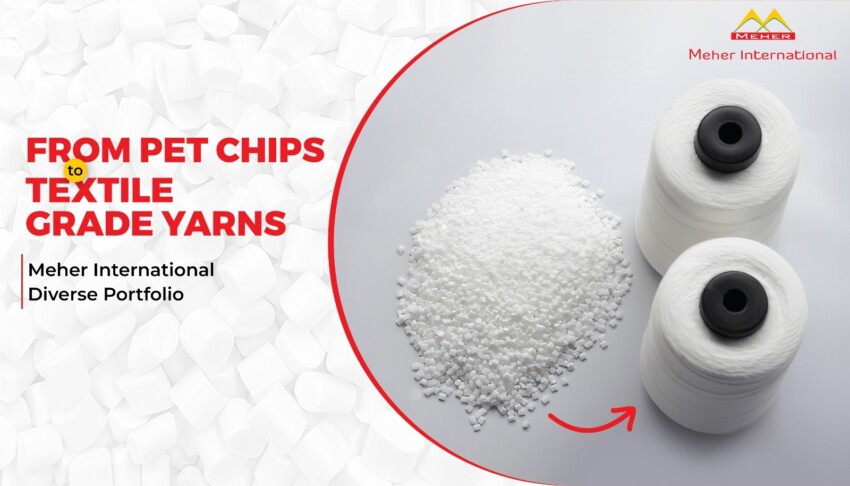
The textile industry is built on a complex chain of materials, technology, and expertise. At the foundation of many modern fabrics lies a powerful raw material — PET chips.
From these small polymer granules, manufacturers create strong polyester fibers and textile grade yarns used across fashion, home textiles, and industrial fabrics. The quality of these raw materials directly influences the performance, durability, and appearance of the final textile product.
Businesses today need reliable suppliers who can provide high-quality polymer materials and yarn solutions under one roof. This is where Meher International plays a vital role.
With a diverse portfolio that includes PET chips, polymer resins like ABS and PBT, and advanced textile-grade yarns, Meher International supports manufacturers across the textile and polymer industries.
This article explores the journey from PET chips to finished yarn, and how Meher International contributes to modern textile manufacturing.
Understanding PET Chips: The Foundation of Polyester Textiles
PET chips, also known as Polyethylene Terephthalate chips, are small polymer pellets that serve as the primary raw material for producing polyester fibers and yarns.
These chips are created through a chemical reaction between purified terephthalic acid (PTA) and monoethylene glycol (MEG). The result is a durable polymer resin that can be melted and processed into fibers.
PET chips are widely used in multiple industries, including:
- Polyester fiber manufacturing
- Textile yarn production
- Packaging and bottles
- Plastic films and industrial materials
For textile manufacturers, textile-grade PET chips are especially important because they determine the strength and consistency of the final yarn.
Types of PET Chips Used in Industry
Not all PET chips are the same. Different grades are developed for different industrial uses.
Textile Grade PET Chips
These chips are specifically designed for producing polyester fibers and yarns. They offer:
- High polymer purity
- Consistent viscosity levels
- Stable melting behavior
- Excellent fiber-forming capability
Bottle Grade PET Chips
Bottle-grade chips are used in packaging applications such as water bottles, beverage containers, and food packaging.
Film Grade PET Chips
Film-grade PET chips are used in the production of flexible plastic films used in packaging and industrial materials.
Among these, textile-grade PET chips are critical for producing high-performance yarns used in modern fabrics.
Why PET Chips Are Important for High-Quality Spun Yarns
The quality of PET chips directly impacts yarn performance. Poor-quality polymer chips can cause defects during spinning and reduce the strength of the final fiber.
Key factors that influence yarn quality include:
- Polymer purity
- Intrinsic viscosity (IV level)
- Moisture content
- Thermal stability
- Uniform chip size
When high-quality PET chips are used, manufacturers can produce yarns that offer:
- Strong tensile strength
- Smooth texture
- Consistent filament structure
- Better dye absorption
- Durable fabric performance
This is why textile manufacturers carefully choose their PET chip suppliers.
From PET Chips to Textile Grade Yarns: The Production Journey
Transforming PET chips into yarn is a sophisticated process that combines chemistry, engineering, and textile technology.
Step 1: Drying the PET Chips
PET chips naturally absorb moisture from the environment. Before processing, they must be dried to remove any moisture that could affect the melting process.
Step 2: Melting the Polymer
The dried chips are heated in specialized equipment until they melt into a viscous liquid.
Step 3: Fiber Spinning
The molten polymer is pushed through spinnerets — small metal plates with tiny holes. This process forms continuous polyester filaments.
Step 4: Cooling and Solidification
The filaments cool rapidly and solidify into strong polyester fibers.
Step 5: Drawing and Stretching
The fibers are stretched to align polymer molecules. This improves strength, elasticity, and durability.
Step 6: Yarn Formation
Finally, the fibers are wound into cones or bobbins to create textile grade yarns ready for weaving or knitting.
This process is essential for producing various types of polyester yarn used in modern textile manufacturing.
Common Types of Textile Grade Polyester Yarns
Polyester yarns produced from PET chips come in several forms, each designed for specific textile applications.
POY (Partially Oriented Yarn)
POY is mainly used as raw material for further texturing processes. It is commonly converted into draw textured yarn.
FDY (Fully Drawn Yarn)
FDY yarn is fully stretched during manufacturing and can be directly used in weaving and knitting.
DTY (Draw Textured Yarn)
DTY yarn is textured to create softness, elasticity, and bulkiness. It is widely used in clothing fabrics.
These yarns are used across industries including:
- Apparel manufacturing
- Sportswear and activewear
- Home furnishings
- Automotive textiles
- Industrial fabrics
Beyond PET Chips: Polymer Resins in Modern Manufacturing
In addition to textile yarn materials, many industries rely on engineering polymer resins for high-performance products.
Companies like Meher International also supply advanced polymer materials such as ABS and PBT resins.
ABS Resin (Acrylonitrile Butadiene Styrene)
ABS is a strong and impact-resistant polymer widely used in:
- Automotive components
- Consumer electronics
- Household appliances
- Industrial equipment
People also want to know about PET chips and textile grade yarns: From PET Chips to Textile Grade Yarns: Meher International’s Diverse Portfolio
PBT Resin (Polybutylene Terephthalate)
PBT is a high-performance engineering plastic with excellent electrical insulation properties.
It is used in:
- Electrical components
- Automotive connectors
- Industrial machinery
- Precision engineering products
These polymers play an important role in industries beyond textiles, demonstrating the wide-ranging applications of polymer technology.
India’s Growing Role in the Global Yarn Supply Chain
India has become one of the world’s leading textile manufacturing hubs. The country has a strong ecosystem that includes:
-
- Polymer raw material suppliers
- Yarn manufacturers
- Fabric producers
- Garment exporters
As a result, many global buyers search for trusted yarn suppliers in India who can deliver quality materials at competitive prices.
Reliable suppliers ensure:
- Consistent product quality
- Timely deliveries
- Professional documentation
- Strong logistics support
Companies that can supply both polymer materials and textile yarns are especially valuable to international buyers.
How Meher International Supports the Textile Industry
Meher International has built its reputation by providing reliable solutions across the polymer and textile value chain.
The company focuses on connecting global manufacturers with high-quality materials used in modern textile production.
Diverse product portfolio
Meher International’s portfolio includes:
- PET chips for textile applications
- Polyester yarn solutions
- Engineering polymer resins such as ABS and PBT
- Raw materials for industrial manufacturing
This diverse offering allows manufacturers to source multiple materials from a single trusted partner.
Reliable Global Supply Capabilities
One of the biggest challenges in international sourcing is supply reliability.
Meher International addresses this through:
- Strong supplier networks
- Quality inspection standards
- Efficient global logistics
- Professional export documentation
These capabilities help textile businesses maintain smooth production without supply interruptions.
Benefits of Choosing the Right Yarn Supplier
For textile manufacturers and exporters, selecting the right supplier can significantly impact production efficiency and product quality.
Operational benefits
Working with a reliable supplier helps ensure:
- Stable raw material supply
- Consistent yarn performance
- Reduced manufacturing defects
- Improved production planning
Commercial advantages
A trusted supplier also helps businesses:
- Improve product quality
- Strengthen customer relationships
- Expand global market reach
- Build long-term partnerships
This is why many international buyers look for experienced yarn suppliers in India.
Why Meher International Best for Best Yarn?
When it comes to sourcing PET chips, polymer resins, and textile grade yarns, Meher International offers reliability, expertise, and global reach.
Core Services
- Supply of high-quality PET chips for textile applications
- Export of textile grade polyester yarns
- Distribution of polymer resins including ABS and PBT
- Global sourcing support for textile manufacturers
Key Benefits
- Consistent material quality
- Competitive international pricing
- Strong global logistics network
- Professional export documentation
Features That Make Meher International Stand Out
- Reliable supplier partnerships
- Export-ready packaging standards
- Responsive communication
- Long-term client relationships
By combining material expertise with efficient global supply solutions, Meher International helps businesses strengthen their production capabilities.
Final Thoughts
The journey from PET chips to textile grade yarns highlights the importance of high-quality raw materials in textile manufacturing.
From polymer production to fiber spinning, every stage plays a role in determining the strength, performance, and quality of the final textile product.
As the textile industry continues to grow globally, businesses need dependable partners who can provide both polymer materials and yarn solutions.
Choose Meher International for Reliable Yarn Supply
Partner with Meher International to access high-quality polymer materials and textile-grade yarns for your manufacturing needs.
Strengthen your supply chain.
Improve product quality.
Expand your global textile business.
Contact Meher International today and discover reliable yarn solutions for modern textile manufacturing.
🌐 Visit: www.meherinternational.com
📧 Email: info@meherinternational.com
📞 Call: +91 261 2328237
📍Address:- 8003 – World Trade Centre, Ring Road, Surat – 395 002, Gujarat, India.
