

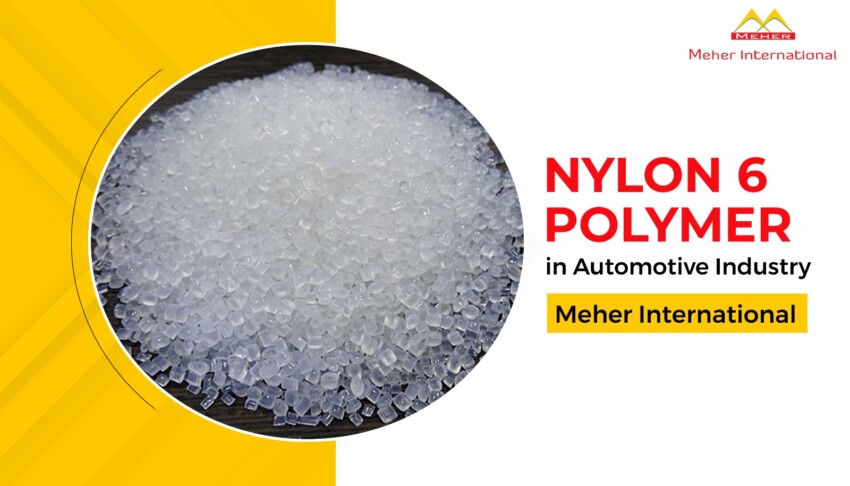
The automotive industry is changing rapidly.
Vehicles are becoming lighter, more efficient, more connected, and increasingly electrified. At the same time, manufacturers are expected to improve durability, safety, performance, and cost efficiency.
This is where material selection becomes critical.
Every component, from an engine-related part to an electrical connector, needs to perform reliably under real-world conditions. Manufacturers therefore need materials that can withstand mechanical stress, temperature changes, chemicals, vibration, and continuous use without adding unnecessary weight.
One material that continues to play an important role in this transformation is Nylon 6 polymer.
Also known as Polyamide 6 (PA6), Nylon 6 is an engineering thermoplastic valued for its strength, toughness, abrasion resistance, chemical resistance, and processing flexibility. These properties make it suitable for a wide range of automotive components and technical applications.
For businesses sourcing advanced polymers and industrial materials, understanding the role of Nylon 6 can help in making better material decisions.
What Is Nylon 6 Polymer?
Nylon 6 is a synthetic polyamide and an important engineering polymer used across automotive, electrical, industrial, and consumer applications.
Its combination of mechanical strength and toughness makes it suitable for components that need to withstand repeated loading and movement.
Unlike traditional metals, Nylon 6 can offer useful mechanical performance at a lower material density. This gives automotive manufacturers an opportunity to replace certain heavier components with appropriately designed polymer parts.
Nylon 6 is also highly processable. Depending on the grade and formulation, it can be processed using techniques such as injection molding and other thermoplastic manufacturing methods.
This flexibility allows manufacturers to create complex shapes while integrating multiple functional features into a single component.
Why Is Nylon 6 Important for Automotive Manufacturing?
The automotive sector is under constant pressure to achieve more with less.
Manufacturers want:
- Lower vehicle weight
- Better fuel or energy efficiency
- Durable components
- Greater design freedom
- Reliable performance
- Efficient production
Nylon 6 can contribute to several of these requirements.
Its value does not come from one single property. Instead, it comes from the combination of strength, toughness, wear resistance, chemical resistance, processability, and lightweight performance.
That balance is what makes Nylon 6 useful for modern automotive engineering.
Key Nylon 6 Polymer Properties for Automotive Applications
- High Strength-to-Weight Performance
Weight reduction is a major consideration in modern vehicle design.
Reducing unnecessary weight can support improvements in overall vehicle efficiency. Nylon 6 offers a lower-density alternative to many traditional metal components while providing useful mechanical strength.
For automotive engineers, this can create opportunities to redesign components without simply replacing one material with another.
The material must still be selected according to the specific load, temperature, geometry, and operating conditions of the component.
- Excellent Toughness
Automotive components experience vibration, impact, repeated movement, and mechanical stress.
A material that is too brittle may fail under sudden loading.
Nylon 6 offers good toughness, making it suitable for applications where components need to withstand mechanical impact and repeated use.
This is particularly valuable in components exposed to continuous vehicle operation.
- Good Abrasion and Wear Resistance
Automotive systems often contain moving parts that experience friction.
Over time, repeated friction can cause wear and affect component performance.
Nylon 6 has good abrasion resistance, making it useful for selected applications involving:
- Gears
- Bushings
- Bearings
- Guides
- Mechanical components
The exact performance depends on the grade, reinforcement, design, and operating environment.
- Chemical Resistance
Automotive components may come into contact with oils, lubricants, fuels, cleaning agents, and other chemicals.
Material compatibility is therefore an important part of automotive design.
Nylon 6 offers resistance to many common chemicals, making it useful in selected automotive environments where exposure to oils and other substances is expected.
However, compatibility should always be evaluated for the specific chemical, temperature, concentration, and exposure time.
- Heat Performance
Under-the-hood automotive applications can involve elevated temperatures.
Nylon 6 provides useful thermal performance, but the appropriate grade must be selected according to the application’s temperature requirements.
For more demanding environments, reinforced or specially modified grades can provide enhanced stiffness, dimensional stability, and heat performance.
This is one reason material selection should be based on application requirements rather than simply choosing standard Nylon 6.
- Design Flexibility
One of the major advantages of thermoplastics is their ability to be molded into complex shapes.
Nylon 6 can support designs featuring:
- Complex geometries
- Thin sections
- Integrated features
- Functional housings
- Lightweight structures
This design flexibility can help engineers consolidate components and simplify assembly.
Where Is Nylon 6 Used in the Automotive Industry?
Nylon 6 can be considered for a variety of automotive applications, particularly where strength, toughness, wear resistance, and processability are required.
Engine and Under-the-Hood Components
Automotive systems operating near the engine require materials capable of handling mechanical and thermal demands.
Depending on the grade and application, Nylon 6 can be used in selected:
- Covers
- Housings
- Brackets
- Air-management components
- Mechanical parts
For high-temperature environments, reinforced or specially formulated engineering polymers may be preferred.
Electrical and Electronic Components
Modern vehicles contain significantly more electrical and electronic systems than traditional vehicles.
This has increased demand for durable polymer materials for components such as:
- Connectors
- Housings
- Cable management components
- Electrical supports
- Protective components
Nylon 6 can provide a useful combination of mechanical performance and electrical application suitability.
Gears and Mechanical Components
Automotive systems contain numerous components that move, rotate, or transfer mechanical forces.
Nylon 6 can be used in selected gears, bushings, guides, and other components where low weight and wear resistance are important.
Interior and Functional Components
Beyond mechanical systems, engineering polymers can also support vehicle interior and functional applications.
Their ability to be molded into complex forms allows designers to combine appearance and functionality.
How Glass-Filled Nylon 6 Improves Automotive Performance
Standard Nylon 6 is not the only option available to automotive manufacturers.
The polymer can be reinforced with materials such as glass fiber to modify its performance.
Glass-filled Nylon 6 can provide improvements in areas such as:
- Stiffness
- Tensile strength
- Dimensional stability
- Heat resistance
- Load-bearing performance
This makes reinforced Nylon 6 particularly relevant for applications where unfilled polymer may not provide sufficient rigidity.
The percentage and type of reinforcement should be selected according to the specific application.
Nylon 6 and Lightweight Vehicle Innovation
Vehicle lightweighting has become an important engineering strategy.
For conventional vehicles, reducing weight can support fuel-efficiency goals. For electric vehicles, lightweight design can also help engineers manage overall vehicle mass and system efficiency.
This does not mean replacing every metal component with plastic.
Instead, the opportunity lies in identifying applications where an engineering thermoplastic can provide the required performance while reducing weight or simplifying component design.
Nylon 6 is one material that can contribute to this approach.
Nylon 6 for Electric Vehicle Applications
The rise of electric mobility is changing automotive material requirements.
Electric vehicles contain different systems and components compared with conventional internal-combustion vehicles.
These include:
- Battery-related components
- Electrical connectors
- Cable management systems
- Electronic housings
- Lightweight structural components
Engineering plastics such as Nylon 6 can support the industry’s move toward lightweight and electrically integrated vehicle architectures.
For EV applications, however, material selection must consider electrical, thermal, mechanical, fire-safety, chemical, and dimensional requirements specific to each component.
Nylon 6 vs Other Engineering Plastics
Automotive manufacturers have access to a broad range of engineering thermoplastics.
Nylon 6 may be evaluated alongside materials such as:
- Nylon 66
- PBT
- ABS
- Polypropylene
- Polycarbonate
- Other specialty engineering polymers
Each material has its own strengths.
For example, PBT resins, based on Polybutylene Terephthalate, are valued for properties such as dimensional stability, electrical performance, and chemical resistance in suitable applications.
The right choice depends on the component.
Instead of asking, “Which polymer is the best?”, automotive manufacturers should ask:
Which polymer is best for this specific application?
Factors such as temperature, mechanical load, moisture exposure, chemical contact, dimensional requirements, processing method, and cost all matter.
Why Quality Matters in Nylon 6 Polymer
Not all Nylon 6 materials will perform identically.
Polymer grade, molecular characteristics, reinforcement, additives, processing conditions, moisture control, and final component design can all influence performance.
For manufacturers, consistent raw material quality is therefore essential.
Important quality considerations may include:
- Material consistency
- Moisture control
- Mechanical properties
- Thermal performance
- Processing characteristics
- Batch consistency
- Application suitability
A reliable supply chain can help manufacturers reduce material-related production issues and maintain consistent product quality.
People you also Nylon 6 polymer high quality properties & yarns: High-Quality Nylon 6 Polymer: Properties & Applications
The Role of Reliable Polymer Suppliers
Choosing an engineering polymer is only one part of the procurement decision.
The supplier also matters.
Automotive manufacturers and component producers need suppliers who understand that industrial materials are not simply commodities. They are inputs that can affect production schedules, quality, cost, and customer expectations.
A reliable supplier can provide:
- Consistent material sourcing
- Product availability
- Technical product information
- Application-oriented guidance
- Export support
- Reliable communication
- Long-term supply relationships
This becomes especially important for manufacturers operating across international markets.
How Meher International Supports Polymer and Yarn Requirements
Meher International offers a broad portfolio of polymers and textile materials for businesses across different industries.
Its material portfolio includes engineering polymers and specialty yarn solutions that can support applications ranging from industrial manufacturing to advanced textiles.
For businesses exploring Nylon 6 polymer, Nylon 66, PBT resins, PET chips, and technical yarns, having access to a diversified material portfolio can simplify sourcing.
Meher International’s Core Product Solutions
Businesses can explore solutions including:
- Nylon 6 polymer
- Nylon 66 polymer
- PBT resins
- ABS resins
- PET chips
- Industrial yarns
- Technical yarns
- High-performance textile materials
This combination allows buyers to evaluate different materials according to their technical and commercial requirements.
Why Meher International Is the Right Partner for Your Material Needs
The right material supplier should help businesses look beyond a single product.
It should understand quality, application requirements, supply reliability, and long-term business needs.
Meher International combines a diversified polymer and yarn portfolio with international sourcing capabilities to support manufacturers and textile businesses.
Key Benefits
- Diverse portfolio of polymers and yarns
- Industrial and technical material solutions
- Reliable sourcing support
- International supply capabilities
- Application-focused product selection
- Professional business communication
- Solutions for varied manufacturing requirements
Whether your requirement is Nylon 6 polymer for automotive applications, engineering plastics for industrial components, or high-performance yarn for textile manufacturing, selecting the right material can make a significant difference.
Why Meher International Is Best for Your Yarn and Polymer Requirements
Automotive innovation is ultimately about solving practical challenges — reducing weight, improving efficiency, increasing durability, and creating better-performing products.
Materials such as Nylon 6 polymer are helping engineers move closer to these goals.
But great material performance begins with reliable sourcing.
Meher International provides businesses with access to a wide range of polymer and yarn solutions, helping them source materials suited to modern industrial requirements.
Choose Meher International for:
- Quality-focused polymer and yarn sourcing
- Wide product portfolio
- Technical and industrial material solutions
- Reliable international supply
- Application-oriented product selection
- Professional support for business requirements
Final Thoughts
Nylon 6 polymer has become an important material in automotive innovation because it offers a valuable combination of strength, toughness, wear resistance, chemical resistance, lightweight performance, and processing flexibility.
As vehicles continue to evolve toward lighter, smarter, and more electrified platforms, engineering thermoplastics will remain an important part of automotive material development.
The key is not simply choosing a strong polymer. It is choosing the right grade, the right material, and the right supply partner for the application.
For businesses looking for reliable Nylon 6 polymer, engineering thermoplastics, industrial polymers, and high-performance yarns, Meher International can be your trusted sourcing partner.
Explore Meher International’s polymer and yarn portfolio today and find the material solution that fits your next manufacturing requirement.
🌐 Visit: www.meherinternational.com
📧 Email: info@meherinternational.com
📞 Call: +91 261 2328237
📍Address:- 8003 – World Trade Centre, Ring Road, Surat – 395 002, Gujarat, India.
